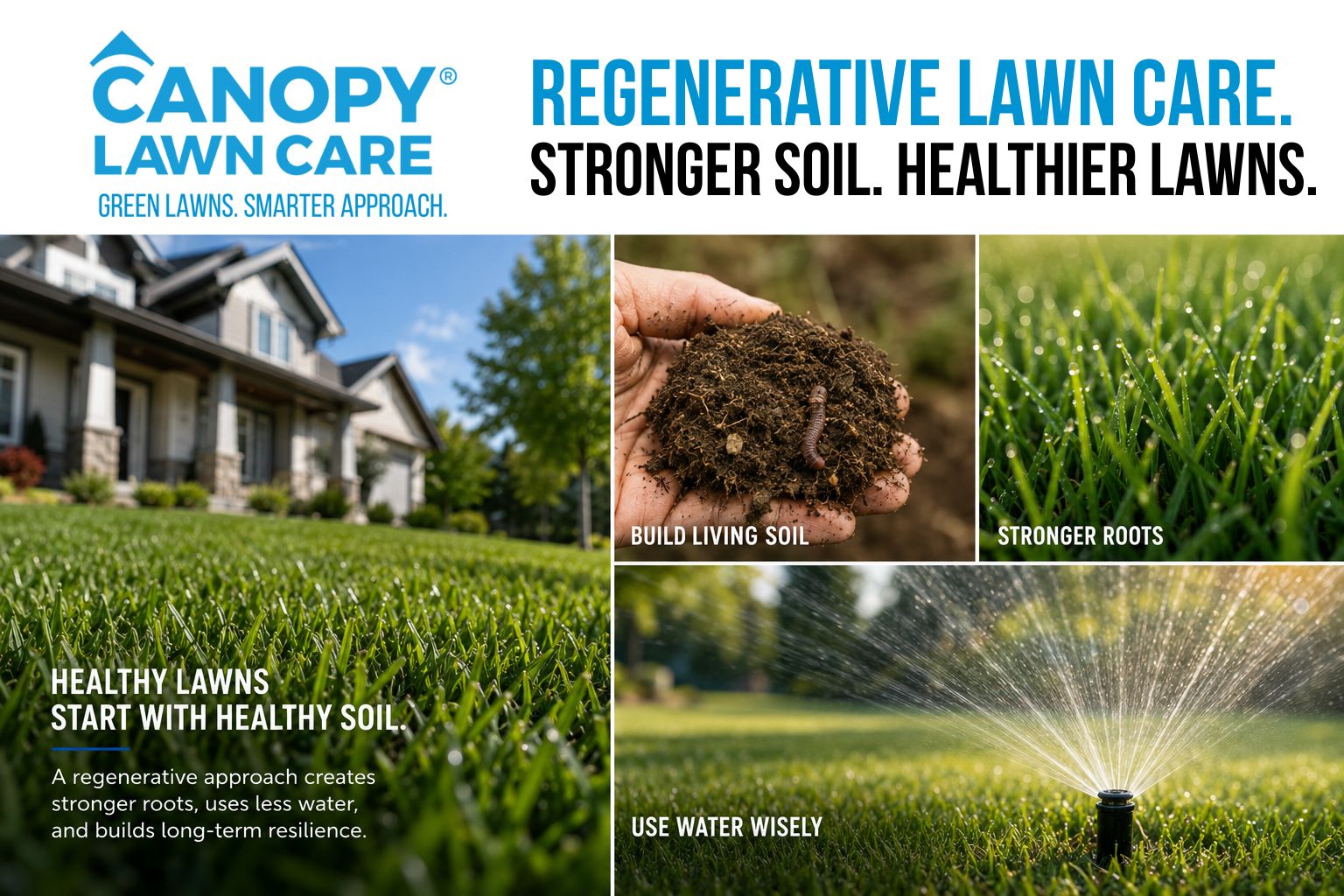
Stop Spraying, Start Thinking: Why Regenerative Lawn Care Begins in the Soil
For decades, the turf care industry has been stuck in a cycle of reaction: a weed pops up, a new chemical gets sprayed. A disease shows up, and another product follows. But what if the real issue isn’t what’s happening on the lawn—but beneath it?
At Canopy Lawn Care, we believe regenerative lawn care doesn’t start with the question, “What chemical should I apply?” It starts with a better one: What does the soil need?
The Problem with Synthetic-First Lawn Care
Drought, disease, insects, and weeds are often symptoms of a deeper imbalance—not root problems in themselves. Yet the standard playbook keeps throwing synthetic solutions at biological problems, expecting long-term results from short-term fixes.
Take nitrogen, for example. Traditional programs overapply it, often in quick-release forms that promote shallow roots, surge growth, and runoff risk. Meanwhile, the soil microbiome—the living system that should be recycling nutrients—is ignored or harmed.
So What’s the Alternative? Feed the Soil
Where others chase symptoms, we build living systems.
Scotts might say “Feed your lawn.”
We say: feed the soil!
At Canopy, we take a biology-first approach using inputs that nourish the soil food web:
- Repurposed coffee grounds as an active carbon source to fuel microbial activity
- Corn gluten meal to provide slow-release nitrogen and additional carbon for fungi and bacteria
- Beneficial microbes like fungi and bacteria to restore a healthy, resilient microbiome
These aren’t marketing gimmicks. They’re tools to regenerate soil function so the lawn becomes more self-sustaining and stress-resilient over time.
Real-World Results from a Balanced Program
Here’s what we applied in one of our service areas:
- 2.19 lb/M of nitrogen, with 70% in a controlled-release form (including organics)
- 0.41 lb/M of phosphorus
- 0.96 lb/M of potassium
That’s significantly lighter than conventional programs—and yet the soil nutrient test results tell the full story:
- Available phosphorus increased nearly 5x (from 52 to 241 ppm)
- Nitrogen availability improved dramatically, peaking in late 2023
- Potassium levels remained steady and sufficient, matching plant uptake
All of this was accomplished without excess synthetic fertilizer, thanks to increased biological activity, better carbon management, and a thriving soil ecosystem.
Why a Thriving Soil Ecosystem Matters
Healthy soil does more than just support the grass. It performs essential functions:
- Cycles nutrients and makes them plant-available
- Suppresses disease through microbial competition
- Improves structure and water infiltration
- Supports deeper rooting, reducing drought stress
- Sequesters carbon, improving long-term fertility and reducing runoff
A soil system that works with nature doesn’t just survive. It thrives—and so does the lawn above it.
Conclusion: It’s Time to Raise the Bar
Regenerative lawn care isn’t a trend. It’s the future of turf management. It may not deliver instant, cosmetic results—but it delivers durability, sustainability, and healthier soil with every season.
It’s time to stop reacting with surface-level fixes.
It’s time to start regenerating.
Want to learn how Canopy Lawn Care builds better lawns through biology? Contact us or explore our HealthyLawn Program to see the difference a soil-first approach makes.