
How Soil Health Helps Pocatello Lawns Survive Heat Stress
Quick Summary
Summer heat stress is one of the biggest challenges facing lawns in Pocatello and throughout Eastern Idaho. While many homeowners assume more water is the solution, healthier soil often plays a much larger role in helping lawns survive hot, dry conditions.
Healthy soil improves water retention, supports deeper root growth, enhances nutrient availability, and creates a more resilient lawn that can better withstand environmental stress. By focusing on soil health and proper watering practices, homeowners can often reduce water waste while maintaining a healthier lawn throughout the summer.
Key Takeaways
- Healthy soil helps lawns retain moisture longer between watering cycles.
- Deep root systems improve a lawn’s ability to withstand heat and drought.
- Compacted soil can increase runoff and reduce water absorption.
- Beneficial soil microbes help improve nutrient cycling and overall lawn health.
- Watering deeply and less frequently encourages stronger root development.
- Improving soil health can help reduce the need for excessive watering during summer.
- A soil-first approach builds long-term lawn resilience rather than short-term green-up.
Eastern Idaho summers can be tough on lawns. Long days of intense sunshine, rising temperatures, and periods of limited rainfall can quickly turn a healthy-looking lawn into one that appears stressed, thin, or discolored.
Many homeowners assume the solution is simple: add more water.
But as we discussed in our recent blog, Helping Pocatello Homeowners Conserve Water With Healthier Lawns, the healthiest lawns aren’t necessarily the lawns receiving the most water. In many cases, the difference between a lawn that thrives through summer and one that struggles comes down to what’s happening below the surface.
Healthy soil plays a critical role in helping lawns withstand heat stress, drought conditions, and the challenges of a hot Idaho summer.
What Is Heat Stress?
Heat stress occurs when grass loses moisture faster than it can absorb it through its root system.
When temperatures rise, grass plants work harder to maintain normal biological functions. During extended periods of heat, lawns may begin to show signs of stress, including:
- Gray or bluish discoloration
- Footprints that remain visible after walking across the lawn
- Thinning turf
- Slower growth
- Wilting or curled grass blades
While these symptoms often lead homeowners to increase watering, heat stress is frequently connected to poor soil conditions that limit the lawn’s ability to access and retain moisture.
Why Soil Health Matters During Summer
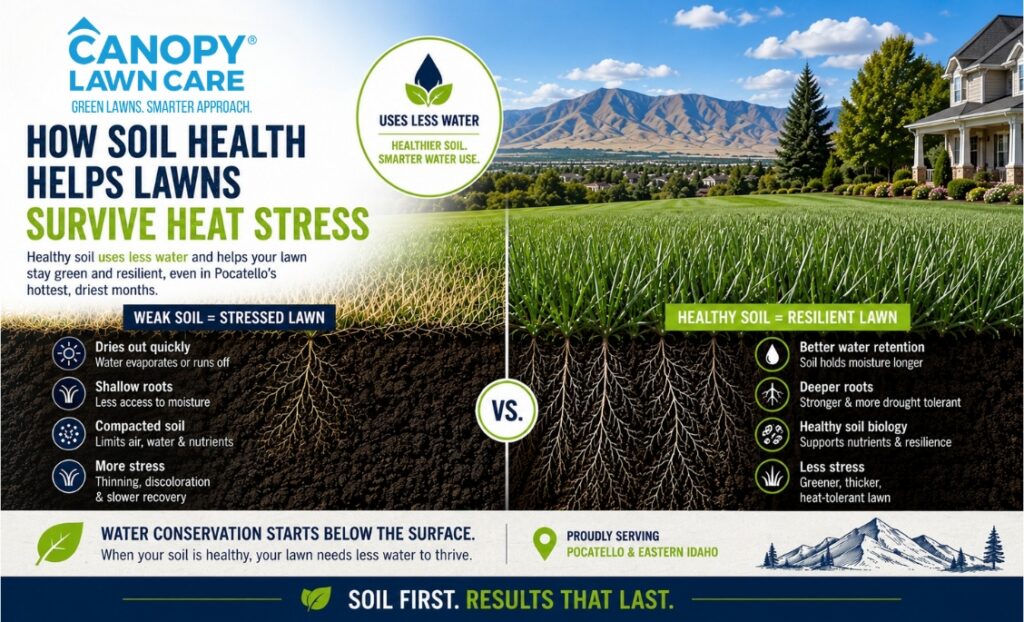
Healthy soil functions like a reservoir for water, nutrients, and beneficial microbial activity.
When soil contains adequate organic matter and biological activity, it can absorb water more efficiently and hold moisture longer. This gives grass roots access to water even during periods of high temperatures and limited rainfall.
By contrast, compacted or depleted soil struggles to perform these functions. Water often runs off the surface or evaporates before it can reach the root zone, leaving the lawn more vulnerable to heat stress.
Healthy soil helps lawns:
- Retain moisture longer between watering cycles
- Encourage deeper root growth
- Improve nutrient availability
- Reduce runoff and water waste
- Support stronger, more resilient turf
In short, healthier soil helps lawns use water more effectively.
The Connection Between Root Systems and Heat Tolerance
One of the biggest advantages of healthy soil is the development of deeper root systems.
Grass with shallow roots relies heavily on frequent watering because moisture near the surface disappears quickly during hot weather. Lawns with deeper roots can access moisture farther down in the soil profile, allowing them to remain healthier and greener during stressful summer conditions.
Think of it this way: a deeper root system acts like a larger savings account for your lawn. When conditions become challenging, the lawn has more reserves to draw from.
This is one reason Canopy Lawn Care focuses on soil health rather than simply pushing top growth with excessive fertilizer applications.
Soil Biology: Nature’s Support System
Healthy lawns depend on more than just grass and water.
Beneath the surface lives an entire ecosystem of beneficial microbes that help break down organic matter, cycle nutrients, and improve soil structure.
When soil biology is thriving, lawns become more efficient at accessing the resources they need to survive environmental stress.
At Canopy Lawn Care, our soil-first approach is designed to support this natural process through practices that encourage healthier soil structure and biological activity.
Over time, healthier soil can lead to healthier roots, better nutrient uptake, and improved resilience during periods of heat and drought.
Watering Smarter, Not More
Water conservation remains an important goal for many Eastern Idaho homeowners, but successful water conservation is about more than simply reducing irrigation.
It’s about creating a lawn that can make better use of the water it receives.
Some of the best watering practices for Pocatello lawns include:
- Water deeply and less frequently
- Water early in the morning when evaporation is lowest
- Avoid daily shallow watering cycles
- Monitor irrigation coverage to prevent runoff
- Focus on improving soil health over time
When healthy soil and proper watering practices work together, lawns are better equipped to handle summer stress while using less supplemental water.
Expert Insight
“Many homeowners think drought tolerance starts with the sprinkler system, but it actually starts with the soil. Lawns with healthier soil profiles often require less supplemental watering because they can hold moisture longer and support deeper root systems. That’s why we focus on building healthier soil first—the grass is simply the result.” — Mike Hrivnak, Director of Agronomy, Canopy Lawn Care
This soil-first philosophy is at the heart of Canopy Lawn Care’s approach to helping Eastern Idaho homeowners maintain healthier lawns while conserving water.
Frequently Asked Questions About Lawn Heat Stress
How can I tell if my lawn is experiencing heat stress?
Common signs include a bluish-gray color, wilting grass blades, visible footprints that remain after walking across the lawn, thinning turf, and slowed growth during hot weather.
Will watering more solve heat stress?
Not always. While lawns need adequate moisture, excessive watering can lead to shallow root systems and additional stress. Improving soil health and watering deeply are often more effective long-term solutions.
What is the best time to water my lawn during summer?
Early morning is generally the best time to water. Cooler temperatures and lower wind speeds help reduce evaporation and allow water to soak into the soil more effectively.
How does soil health improve drought tolerance?
Healthy soil retains moisture longer, supports deeper roots, and improves nutrient availability. Together, these factors help grass withstand periods of heat and limited rainfall.
Can compacted soil make heat stress worse?
Yes. Compacted soil reduces water infiltration and root growth, making it harder for grass to access moisture during hot weather.
How long does it take to improve soil health?
Soil improvement is a long-term process. Homeowners often begin seeing improvements in lawn performance within a growing season, while significant soil health gains typically occur over multiple seasons of consistent management.
Does healthier soil help conserve water?
Yes. Lawns growing in healthier soils typically use water more efficiently because the soil can absorb and retain moisture for longer periods, reducing the need for frequent irrigation.
Building a More Resilient Lawn in Pocatello
Every lawn faces environmental stress at some point during the summer. The difference is how well the lawn is prepared to handle it.
By improving soil health, encouraging deeper roots, and supporting the natural biology beneath the surface, homeowners can build lawns that are better equipped to withstand heat, drought, and seasonal stress.
As temperatures continue to rise throughout the summer, remember that a healthier lawn starts below ground.
The more you invest in soil health today, the more resilient your lawn can become tomorrow.
Schedule a Free Lawn Evaluation
If your lawn is struggling with drought stress, thinning turf, poor color, or excessive watering demands, Canopy Lawn Care can help.
Our soil-first approach is designed to improve long-term lawn health, increase resilience, and help homeowners make smarter use of water throughout the growing season.
Contact Canopy Lawn Care of Pocatello today for a free lawn evaluation and learn how healthier soil can help your lawn thrive through the heat of summer.



