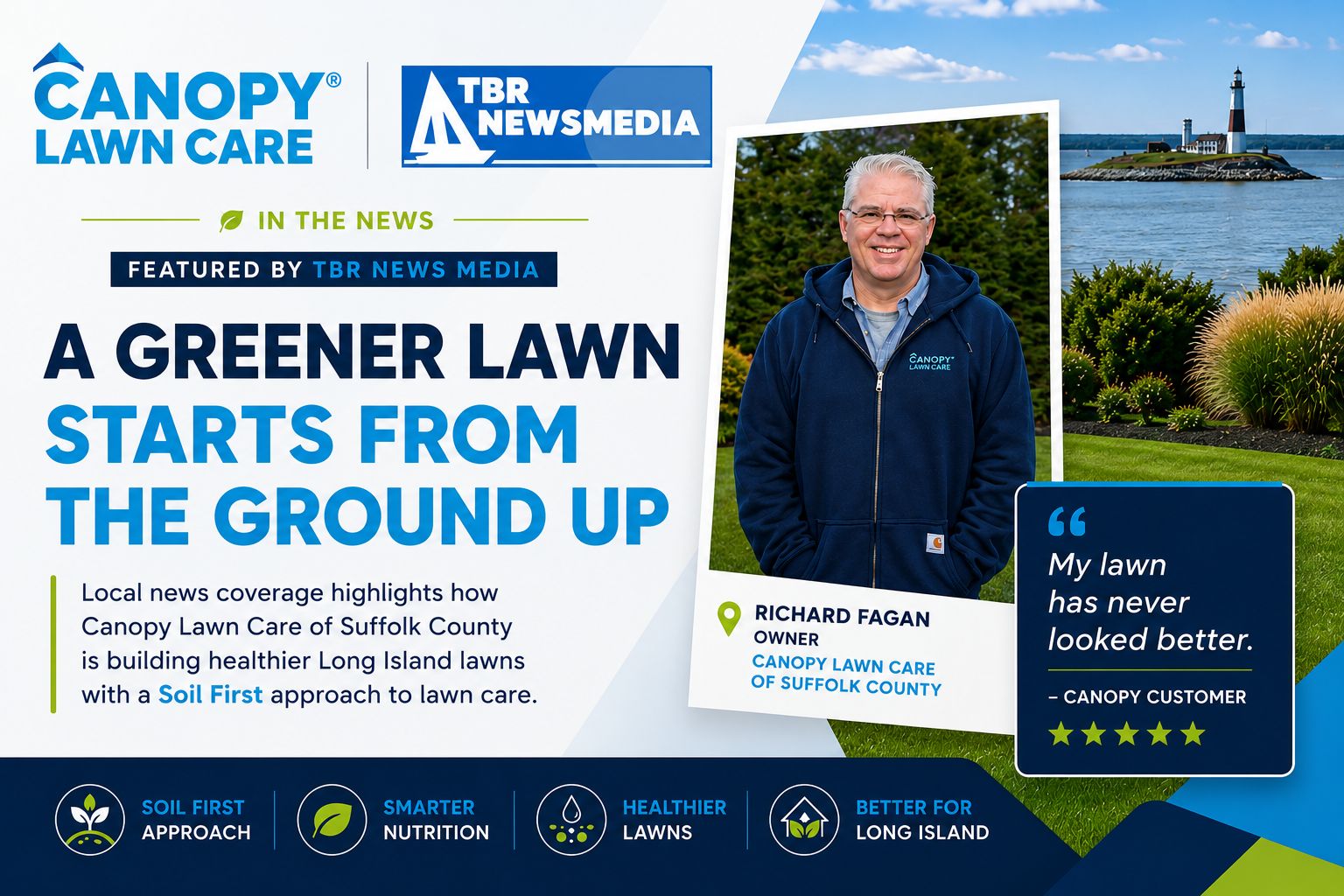
Canopy Lawn Care of Suffolk County Featured by TBR News Media
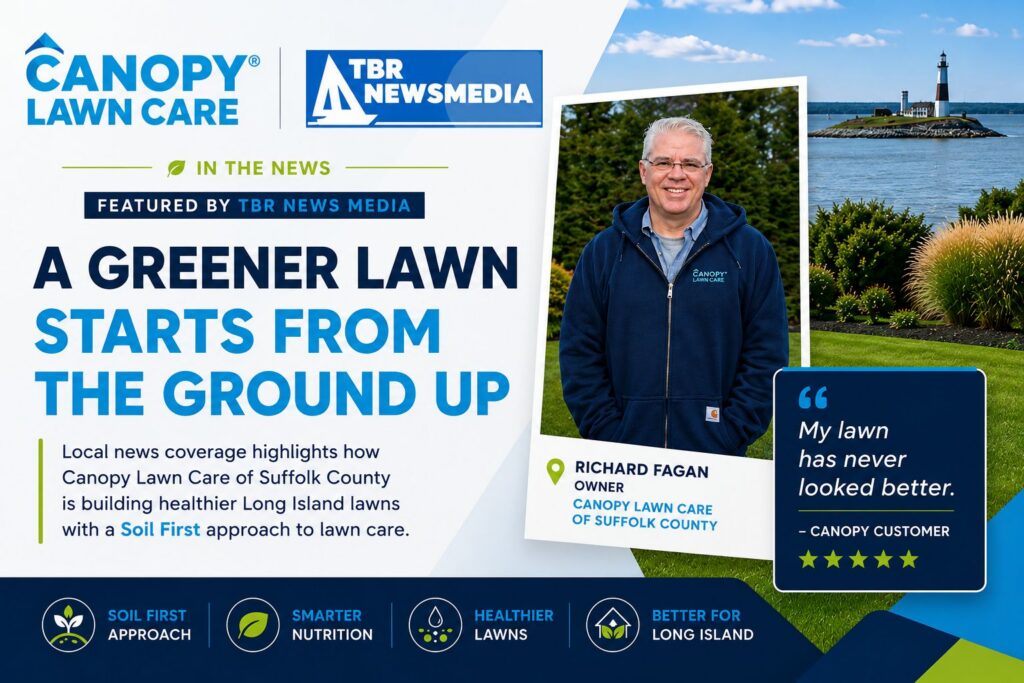
Summary: Local news coverage highlights how Canopy Lawn Care of Suffolk County is taking a Soil First approach to building healthier Long Island lawns—with thoughtful nutrition, targeted treatments and a focus on what’s happening beneath the grass.
- Canopy Lawn Care of Suffolk County was recently featured by TBR News Media for its approach to building healthier lawns from the soil up.
- Canopy’s Soil First approach focuses on improving the environment where grass grows, not simply treating problems after they appear.
- This approach is especially relevant on Long Island, where lawn health, soil conditions and responsible product use all matter.
- Local owner Richard Fagan and his family bring Canopy’s modern lawn care approach to homeowners throughout their Suffolk County service area.
- The feature arrives as Long Island homeowners prepare their lawns for the important fall growing season.
A Different Approach to Lawn Care Is Getting Attention on Long Island
What does it take to build a healthier lawn?
For Canopy Lawn Care, the answer starts below the surface.
That approach recently caught the attention of TBR News Media, which featured Canopy Lawn Care of Suffolk County and local owner Richard Fagan in the article, “For Canopy Lawn Care, a Greener Lawn Starts from the Ground Up.”
The story explores what makes Canopy different from many traditional lawn care programs: an emphasis on soil health, stronger roots, thoughtful lawn nutrition and targeted applications designed to help build a better growing environment over time.
Read the full TBR News Media feature
Why Soil Health Matters for Suffolk County Lawns
A lawn is more than the grass you see.
Healthy turf depends on the soil beneath it for water, nutrients and the environment necessary to develop a strong root system. Compacted or underperforming soil can make it harder for grass to reach its potential—even when homeowners are regularly fertilizing, watering and mowing.
That is why Canopy approaches lawn care differently.
Our Soil First approach looks beyond treating individual symptoms and focuses on helping create the conditions necessary to build a stronger lawn.
As TBR News Media highlighted, Canopy’s approach can include soil-building nutrition, beneficial microorganisms and thoughtfully selected inputs alongside professional lawn treatments.
The objective isn’t simply to apply more products.
It’s to build a better lawn from the ground up.
Lawn Building, Not Just Lawn Treatment
Traditional lawn care can become a cycle of reacting to whatever problem appears next: weeds emerge, apply weed control; color fades, apply fertilizer; another problem develops, apply another treatment.
Canopy believes homeowners deserve a more thoughtful strategy.
Building a healthy lawn means considering how soil condition, grass density, root development, nutrition, watering, mowing and seasonal lawn care work together.
A thicker, healthier lawn can also become part of its own defense system. Dense turf leaves less room for weeds to establish and helps create a lawn that is better prepared to handle the stresses Long Island properties experience throughout the year.
This doesn’t mean professional treatments aren’t important. They are.
It means treatments should be part of a larger lawn-building strategy, rather than the entire strategy.
A Modern Approach Designed With Long Island in Mind
For Suffolk County homeowners, responsible lawn care has particular significance.
Long Island relies heavily on groundwater, making conversations about what goes onto lawns—and how those inputs are used—especially important.
As discussed in the TBR News Media feature, Canopy uses a more targeted approach to traditional lawn care products while incorporating soil-focused nutrition designed to support healthier turf.
Canopy’s Carbon+ soil-building service, for example, combines naturally derived ingredients designed to support soil and plant health. Rather than relying solely on conventional fertilizer inputs, the Canopy program is designed around improving the growing environment while providing the nutrition and protection a lawn needs.
It is part of Canopy’s broader commitment to redefining lawn care from the ground up.
Local Ownership. National Lawn Care Expertise.
The TBR News Media feature also highlights another important part of the Canopy Lawn Care of Suffolk County story: the people behind the lawns.
Richard Fagan operates the local Canopy business alongside his family, bringing Canopy’s lawn care system and agronomic resources together with the accountability and personal service of a locally owned business.
That combination matters.
Suffolk County homeowners receive a lawn program informed by Canopy’s broader expertise while working with a local team that understands the lawns, growing conditions and expectations of homeowners on Long Island.
And Richard has seen the approach work firsthand.
As he told TBR News Media about his own property:
“My lawn has never looked better.”
Fall Is an Important Time to Build a Better Long Island Lawn
The timing of the TBR News Media feature couldn’t be better.
Late summer and fall can be an important period for cool-season lawns on Long Island. As temperatures begin to moderate, homeowners have an opportunity to address soil compaction, strengthen existing turf and prepare their lawns for the seasons ahead.
Core aeration can play an important role in that process by relieving compacted soil and creating pathways for air, water and nutrients to move into the root zone.
When appropriate for the lawn, pairing aeration with other fall lawn-building practices can help create stronger growing conditions heading into next spring.
The important distinction is that fall lawn care isn’t simply about making a lawn look better for a few weeks.
It’s an investment in what the lawn can become next season.
Building Healthier Lawns Across Suffolk County
We’re proud to see Canopy Lawn Care of Suffolk County recognized by TBR News Media—not simply because Canopy was featured, but because the story captures what we’re working to change about lawn care.
Healthy lawns don’t begin with a bottle or a treatment.
They begin with understanding the soil, choosing the right inputs, applying them thoughtfully and giving grass what it needs to become stronger over time.
That’s the idea behind Canopy’s Soil First approach.
And it’s how Richard and the Canopy Lawn Care of Suffolk County team are working to build better lawns throughout their local Long Island communities.
Ready to build a healthier lawn from the ground up?
[Learn more about Canopy Lawn Care of Suffolk County and request your lawn evaluation.]
Frequently Asked Questions
What makes Canopy Lawn Care different from traditional lawn care companies?
Canopy takes a Soil First approach that considers soil health, lawn nutrition, root development and targeted treatments as parts of a complete lawn-building program. The goal is to create healthier growing conditions rather than simply reacting to individual lawn problems.
Why is soil health important for Long Island lawns?
Soil affects how grass accesses water, nutrients and oxygen. Improving growing conditions in the root zone can support stronger turf and help homeowners get more from their overall lawn care program.
Does Canopy Lawn Care of Suffolk County offer fall aeration?
Canopy Lawn Care of Suffolk County provides seasonal lawn services based on the needs of local lawns. Core aeration can help relieve soil compaction and improve movement of air, water and nutrients into the root zone. Contact the local Canopy team to determine the right fall services for your property.
Is Canopy Lawn Care locally owned in Suffolk County?
Yes. Canopy Lawn Care of Suffolk County is locally owned and operated by Richard Fagan and his family, combining local service and accountability with Canopy’s lawn care programs, resources and expertise.
Where can I read the TBR News Media article about Canopy Lawn Care?
TBR News Media’s feature, “For Canopy Lawn Care, a Greener Lawn Starts from the Ground Up,” profiles Canopy Lawn Care of Suffolk County and explains the company’s Soil First approach to building healthier lawns on Long Island.
Related Lawn Care, Press, Seasonal Tips
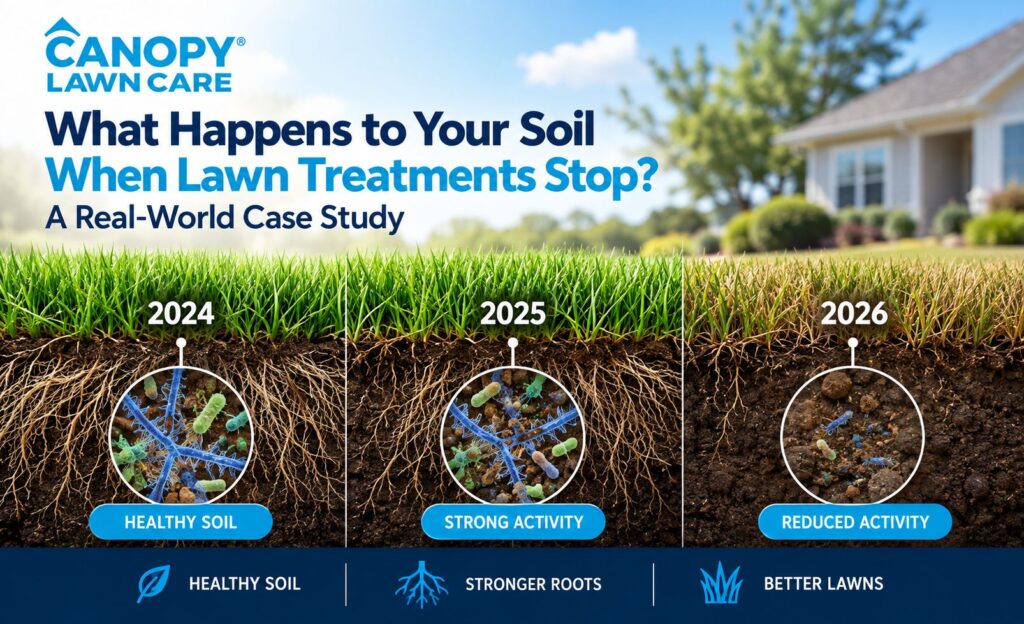
What Happens to Your Soil When Lawn Treatments Stop? A Real-World Case Study