How Much Should You Water Your Lawn? A Guide for Warm- and Cool-Season Grass

Watering seems simple. Turn on the sprinkler and give the lawn a drink.
But how you water can be just as important as how much you water.
Grass type, soil, rainfall, temperature and season all affect your lawn’s needs. That’s why Canopy recommends watering based on the lawn and current conditions—not simply running an irrigation system every day.
Key Takeaways
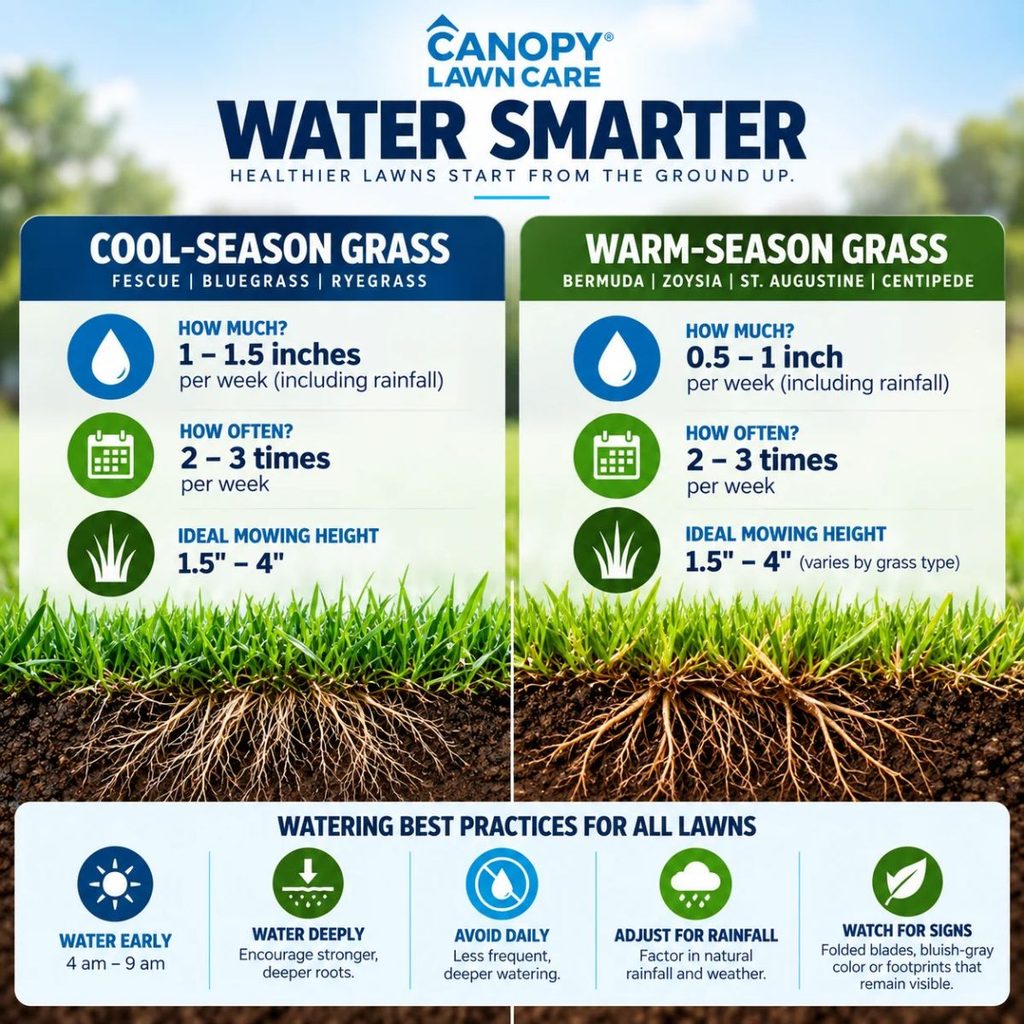
- Cool-season grass: generally target about 1–1.5 inches of total water per week, including rainfall.
- Warm-season grass: generally target about 0.5–1 inch per week, including rainfall.
- Water established lawns deeply rather than lightly every day.
- Early morning—approximately 4–9 a.m.—is typically the best watering window.
- Bluish-gray color, folded blades and footprints that remain visible are signs that grass may need water.
- Rainfall, soil type, heat and drought should always influence your watering schedule.
How Should You Water Cool-Season Grass?
Cool-season grasses include tall fescue, Kentucky bluegrass, perennial ryegrass and fine fescue.
As a general starting point, established cool-season lawns should receive approximately 1–1.5 inches of total water per week, including rainfall, typically divided across two or three watering events.
The goal isn’t constantly wet soil. It’s getting moisture into the root zone and allowing the lawn to use that water before irrigating again.
NC State Extension similarly recommends watering established lawns deeply and notes that approximately 1 inch per week is adequate in many conditions. Its tall-fescue guidance recommends wetting soil approximately 4–6 inches deep rather than relying on frequent surface watering. NC State Extension
For more information about how these grasses behave throughout the year, read our guide to warm-season vs. cool-season grass.
How Should You Water Warm-Season Grass?
Warm-season grasses include Bermuda, zoysia, St. Augustine and centipede.
Canopy’s general recommendation is approximately 0.5–1 inch of total water per week, typically across two or three watering events. Conditions matter, however. Hot, dry weather and sandy soils may require different irrigation than cooler weather or moisture-retaining clay soils.
Research-based turf recommendations support this flexible approach. Oklahoma State University advises watering according to the lawn’s actual need because soil type, temperature, humidity, wind and rainfall all affect water use. extension.okstate.edu
For additional warm-season guidance, see Canopy’s warm-season mowing and watering guide.
How Do You Know When Your Lawn Needs Water?
Watch your lawn—not just your irrigation controller.
Common signs of moisture stress include:
- Grass blades folding or curling inward
- A dull or bluish-gray color
- Footprints remaining visible longer than normal
- Soil becoming difficult to penetrate with a screwdriver
These indicators align closely with NC State’s turfgrass recommendations. NC State Extension
If rainfall has already supplied enough moisture, adjust your irrigation accordingly. During drought or under local watering restrictions, always follow applicable local requirements.
Why Does Canopy Recommend Deep, Less-Frequent Watering?
Frequent, light irrigation tends to wet the surface without adequately reaching the root zone. Deeper watering can encourage roots to explore more of the soil profile.
That’s important because a healthier lawn isn’t just what you see above ground.
Canopy’s soil-first approach focuses on creating better conditions for roots, water movement and nutrient availability. Healthy soil can’t eliminate your lawn’s need for water, but better soil conditions can help the lawn use available resources more effectively.
Learn more about Canopy’s Soil Builder and our approach to improving the environment beneath your lawn.
The Best Watering Schedule Isn’t Really a Schedule
Your lawn doesn’t know that your irrigation controller says Tuesday, Thursday and Saturday.
It responds to soil moisture, rainfall, temperature, sunlight and its own biology.
Use Canopy’s recommendations as a starting point, then adjust based on conditions. Water early. Water deeply. Account for rainfall. And learn to recognize when your lawn is actually asking for water.
Smarter watering isn’t about using more water. It’s about helping your lawn make better use of the water it receives.
Related Grass Guide, Lawn Care, Seasonal Tips