Should You Continue Lawn Treatments During a Drought?
The Short Answer: Yes—Your Lawn Needs Support During Drought More Than Ever
Summary
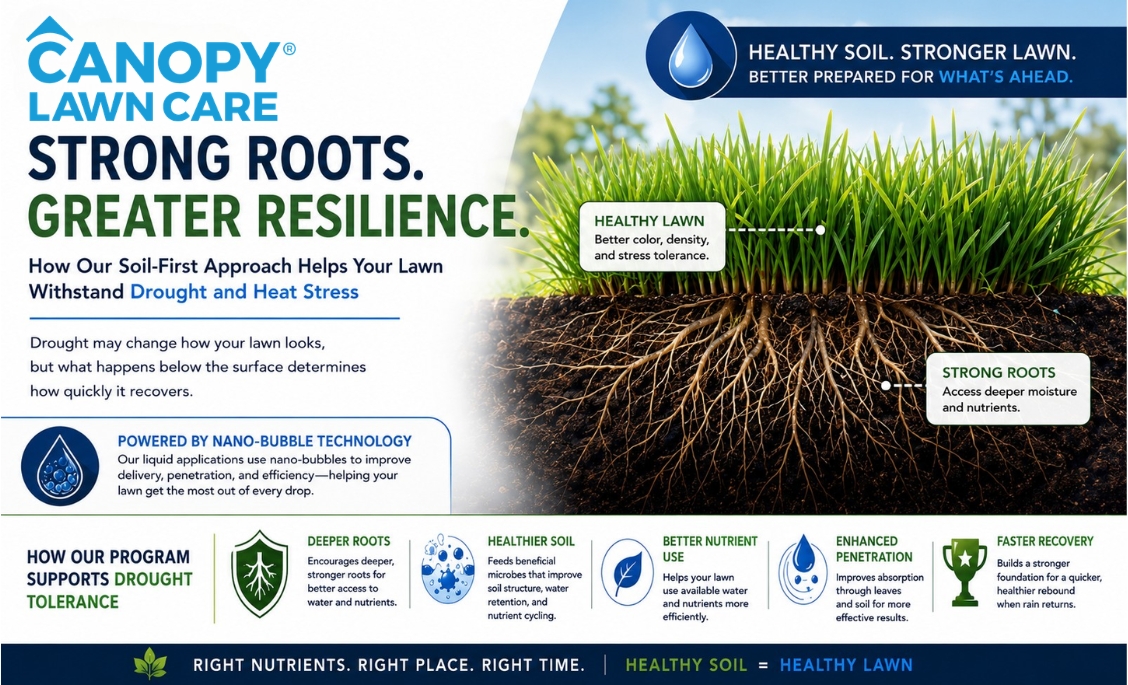
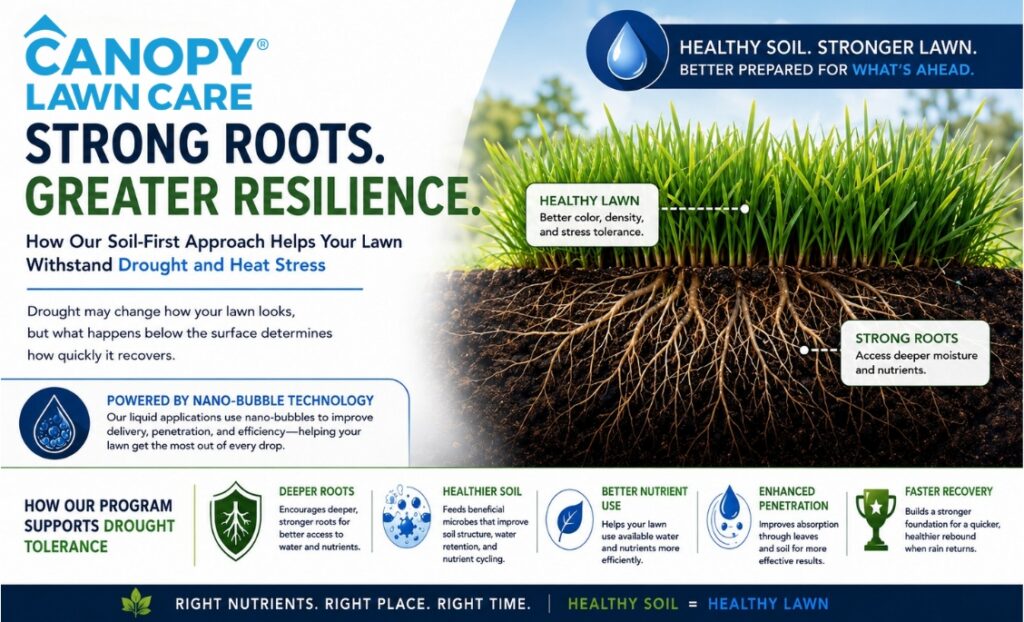
Drought conditions can cause lawns to lose color, slow growth, and appear unhealthy, but much of the most important activity is happening below the surface. Healthy soil, active microbes, and strong root systems help lawns withstand heat and water stress while improving recovery when rainfall returns. A soil-first lawn care program can support drought tolerance by improving nutrient efficiency, root development, and overall soil health—even when grass growth slows.
Key Takeaways
- Drought affects how grass looks, but not necessarily how healthy the root system is.
- Healthy soil retains moisture more effectively and supports stronger drought resistance.
- Deep roots help grass access water farther below the soil surface.
- Liquid lawn treatments can improve nutrient uptake and plant efficiency during stressful conditions.
- Beneficial soil microbes play a critical role in nutrient cycling and drought resilience.
- Pausing lawn treatments during drought can slow soil improvement and delay recovery.
- The best defense against drought is a long-term strategy focused on soil health, root development, and efficient nutrient use.
When drought conditions arrive, many homeowners assume lawn treatments should stop until rain returns.
It’s a reasonable thought. After all, if the grass isn’t growing, why continue investing in lawn care?
The reality is that drought doesn’t stop what’s happening beneath the surface. While grass blades may turn dull, growth may slow, and lawns may appear stressed, the root system and soil biology are still working. In fact, maintaining soil health during drought is often one of the most important factors in how quickly a lawn recovers once moisture returns.
At Canopy Lawn Care, our soil-first approach is specifically designed to help lawns build resilience during periods of heat and water stress.
What Happens to Grass During a Drought?
When moisture becomes limited, most turfgrass species enter a survival mode.
Common signs include:
- Fading green color
- Slower growth
- Footprints remaining visible longer
- Leaf blades folding or curling
- Thin or patchy appearance
- Early dormancy
These symptoms don’t necessarily mean your lawn is dying. In many cases, the grass is conserving energy and protecting itself until conditions improve.
The challenge is that drought stress also weakens roots, slows nutrient uptake, reduces microbial activity, and increases vulnerability to weeds, disease, and future environmental stress.
Why Soil Health Matters During Drought
Healthy soil acts like a reservoir.
Soils rich in organic matter and beneficial microbial activity can:
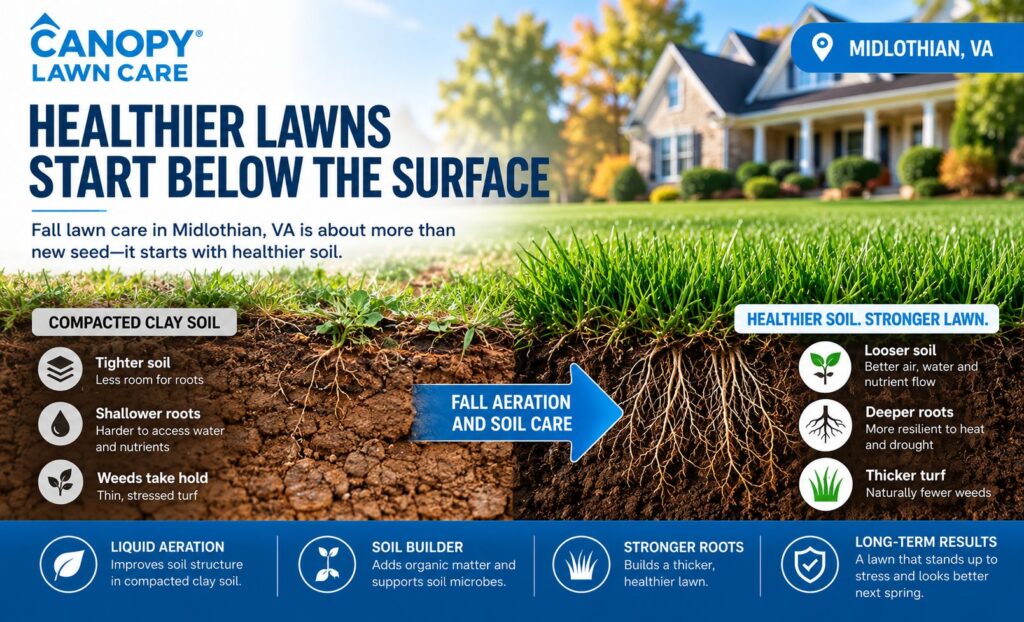
- Hold moisture longer
- Improve water infiltration
- Reduce runoff
- Support deeper root systems
- Increase nutrient availability
- Help turf recover faster after stress
This is one reason why two neighboring lawns can experience the same weather conditions but perform very differently during a drought.
The difference is often below the surface.
Can Lawn Treatments Help During a Drought?
The right lawn treatments can support drought tolerance, but not all programs are created equal.
Traditional lawn programs often rely heavily on granular fertilizers that require significant moisture to dissolve and move into the soil profile.
Canopy Lawn Care utilizes advanced liquid applications designed to improve nutrient availability and support soil health even during challenging growing conditions.
Our applications focus on:
- Root development
- Soil biology
- Nutrient efficiency
- Plant health and stress tolerance
- Long-term soil improvement
Rather than simply feeding top growth, the goal is to strengthen the entire soil-plant system.
How Liquid Applications Support Drought-Stressed Lawns
One of the advantages of liquid lawn treatments is targeted delivery.
Liquid applications can:
Improve Nutrient Uptake: Nutrients are applied directly to the leaf surface, crown, and soil profile where they can be more readily utilized by the plant.
Support Root Development: Healthy roots are critical during drought because deeper roots can access moisture unavailable near the surface.
Enhance Plant Efficiency: Well-nourished turf can utilize available water and nutrients more effectively, helping reduce stress.
Feed Soil Microbes: Beneficial soil microorganisms play a vital role in nutrient cycling, organic matter breakdown, and overall soil health.
Improve Recovery Potential: While no lawn treatment can replace rainfall, maintaining soil health during drought helps position the lawn for a faster recovery when normal weather patterns return.
Why Homeowners Should Avoid Pausing Lawn Treatments During Drought
One of the most common mistakes homeowners make is stopping lawn care during periods of drought.
While it may seem like a way to save money, it often creates additional challenges later.
When treatments are paused:
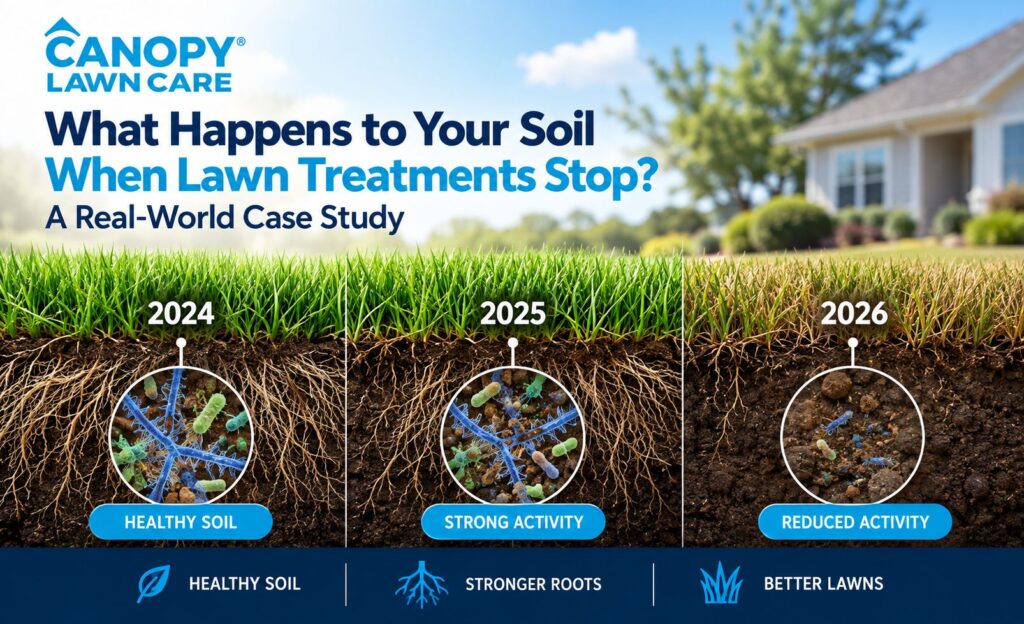
- Root development may slow
- Soil health improvements stall
- Weed pressure can increase
- Recovery may take longer
- Additional corrective treatments may be needed
Think of drought lawn care the same way you think about preventative healthcare. The goal isn’t simply to solve visible problems today—it’s to build resilience for tomorrow.
Additional Ways to Improve Lawn Drought Tolerance
Along with a soil-focused lawn care program, homeowners can improve drought resistance by:
Water Deeply and Infrequently: Deep watering encourages roots to grow deeper into the soil profile.
Mow Higher: Taller grass shades the soil surface, reduces evaporation, and promotes deeper roots.
Improve Soil Structure: Aeration and carbon-rich soil amendments can reduce compaction and improve water movement.
Avoid Excessive Nitrogen: Aggressive top-growth stimulation during heat and drought can increase plant stress.
Build Organic Matter: Healthier soils retain moisture more effectively and support beneficial microbial activity.
Frequently Asked Questions
Should I fertilize my lawn during a drought?
A balanced, professionally managed lawn care program can support plant health during drought. However, excessive fertilization or improper applications can increase stress. Soil-focused programs designed for drought resilience are often the most effective approach.
Is liquid fertilizer better than granular fertilizer during drought?
Liquid applications can provide more immediate availability and targeted delivery. However, the best results come from a complete soil health strategy rather than any single product type.
Will lawn treatments make my grass green during a drought?
Not necessarily. Drought may still cause discoloration or dormancy. The goal is often to maintain plant health, support roots, and improve recovery potential when moisture returns.
Can a lawn recover after drought?
Yes. Most established turfgrass species can recover from drought if the root system remains healthy and growing conditions improve.
The Bottom Line
Drought affects what you see above the surface, but the most important work happens below it.
Healthy roots, active soil biology, efficient nutrient use, and improved moisture management all contribute to a lawn’s ability to withstand stress and recover when conditions improve.
That’s why drought is often the time when a soil-first lawn care program delivers some of its greatest value.
A healthier lawn starts with healthier soil—and healthy soil doesn’t take a season off.
Related Grass Guide, Lawn Care, Seasonal Tips
What Happens to Your Soil When Lawn Treatments Stop? A Real-World Case Study