Warm-Season vs. Cool-Season Grass: What Does Your Lawn Need This Fall?
Fall lawn care isn’t one-size-fits-all. Your grass type determines what your lawn needs now—and the right fall strategy can help build a healthier, stronger lawn for the seasons ahead.
Key Takeaways:
- Cool-season and warm-season grasses respond very differently to fall weather.
- Tall fescue benefits from fall growth and recovery, making this an important season for aeration, overseeding and nutrition.
- Bermuda, zoysia, St. Augustine and centipede grasses begin preparing for dormancy, shifting the focus toward weed prevention, soil health and preparing the lawn for spring.
- Fall weed control can help prevent problems before they emerge, particularly in warm-season lawns.
- The best lawn-care plan starts with your grass type, local climate and soil—not a one-size-fits-all treatment schedule.
Why Your Grass Type Changes Your Fall Lawn Care Plan
When temperatures begin to drop, homeowners across the country start asking many of the same questions: Should I fertilize my lawn? Should I aerate? Do I need to seed? Is it too late to control weeds?
The answer usually starts with another question:
What type of grass do you have?
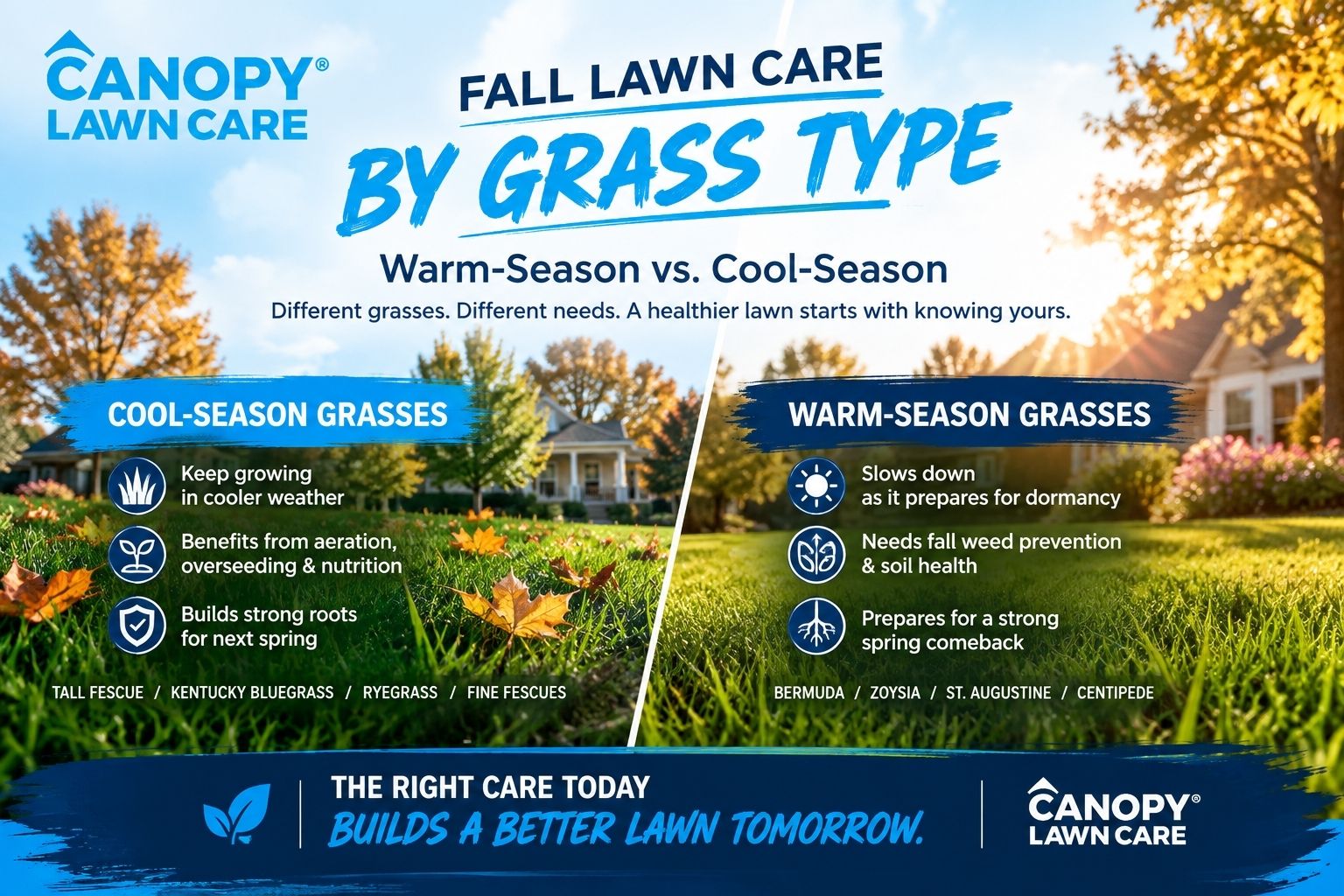
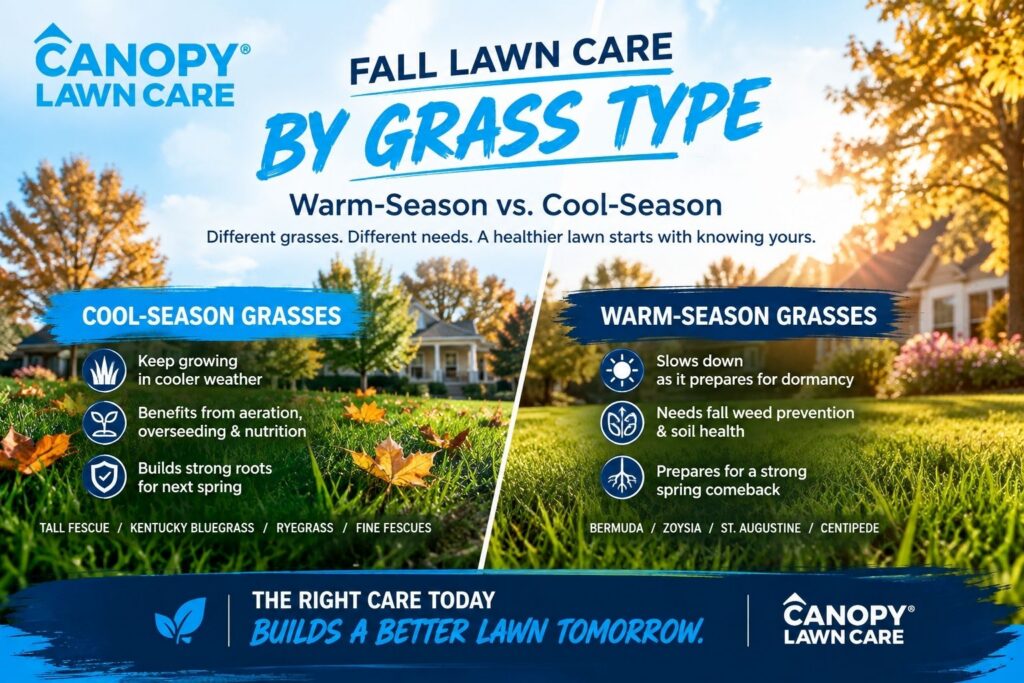
Grass species are generally divided into two categories: cool-season grasses and warm-season grasses. Each grows on a different seasonal cycle, which means the right fall lawn care in North Carolina or Virginia may be very different from the right approach in Texas, Oklahoma or Florida.
Understanding that difference is one of the most important steps toward giving your lawn what it actually needs.
Cool-Season Grasses: Fall Is Growing Season
Cool-season grasses thrive when temperatures become milder. Common varieties include:
- Tall fescue
- Kentucky bluegrass
- Perennial ryegrass
- Fine fescues
For these lawns, fall isn’t the end of the growing season. It’s one of the most important periods of growth and recovery.
Summer heat, drought, foot traffic, insects and disease can leave cool-season turf thin or stressed. Cooler temperatures create better conditions for root development and new grass establishment.
What should you do for cool-season grass in the fall?
Depending on your lawn and local conditions, fall care may include:
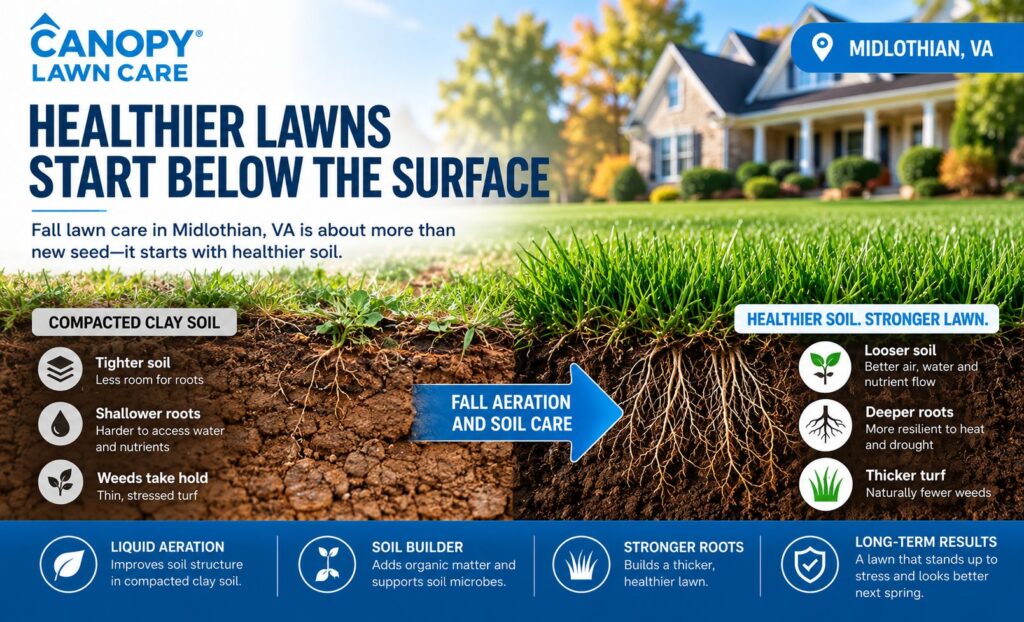
Core aeration. Compacted soil can make it harder for air, water and nutrients to reach the root zone. Removing small plugs of soil can help relieve compaction and create better growing conditions.
Overseeding. Fall provides favorable conditions for establishing new cool-season grass. Overseeding can help fill thin areas and improve turf density.
Support the soil. New and existing grass both depend on the environment beneath the lawn. Providing appropriate nutrition and supporting healthy soil can help encourage stronger root development.
Water correctly. Newly seeded lawns require a different watering approach than established turf. Consistent moisture during germination and establishment is especially important.
For homeowners with tall fescue lawns, these weeks can have an outsized effect on how the lawn develops heading into next year.
Warm-Season Grasses: Fall Is About Preparing, Not Rebuilding
Warm-season grasses follow a very different calendar. Common varieties include:
- Bermuda grass
- Zoysia grass
- St. Augustine grass
- Centipede grass
These grasses thrive during hot summer conditions. As temperatures cool and daylight decreases, their growth begins to slow as they move toward winter dormancy.
That doesn’t mean lawn care should stop.
It means the objective changes.
Rather than pushing new top growth, fall is a time to help warm-season lawns transition appropriately, protect the progress made during summer and prepare for the next growing season.
What should you do for warm-season grass in the fall?
Get ahead of weeds. Fall pre-emergent applications can play an important role in preventing certain cool-season weeds from becoming established. Waiting until weeds are visible may mean you’ve already missed the best opportunity for prevention.
Continue supporting healthy soil. A soil-first approach isn’t limited to the months when grass is actively growing fastest. Soil conditions influence nutrient availability, root health and how effectively a lawn uses water.
Adjust mowing as growth slows. Your lawn’s growth rate changes with the season. Continue mowing as necessary rather than stopping based simply on the calendar.
Watch your watering. Cooler weather can reduce the lawn’s water requirements. Adjust irrigation based on weather, rainfall, soil conditions and the needs of your particular grass.
Avoid treating warm-season grass like fescue. Overseeding or aggressively stimulating growth isn’t automatically appropriate simply because it’s fall. Your grass species and local growing conditions should guide the plan.
Should You Aerate and Overseed Every Lawn in Fall?
No, and this is one of the biggest misconceptions about fall lawn care.
Fall aeration and overseeding are particularly valuable strategies for many cool-season lawns, especially tall fescue.
But homeowners with warm-season turf shouldn’t automatically follow the same plan.
For example, Bermuda and zoysia grow and recover most aggressively during warmer weather. Their fall priorities are different from those of a tall fescue lawn entering its prime growing season.
That’s why copying your neighbor’s lawn-care schedule isn’t necessarily a good idea—even if you live on the same street.
Two Neighbors Can Need Two Very Different Lawn-Care Plans
One homeowner may have tall fescue that needs aeration and overseeding.
The lawn next door might be Bermuda that needs fall weed prevention and preparation for dormancy.
The soil may be different. Sun exposure can vary. Irrigation coverage can change from one property to another. Even the history of how the lawns have been maintained matters.
Healthy lawns aren’t built by following a generic calendar. They’re built by understanding what the individual lawn needs.
That’s also why identifying your grass type is such an important starting point.
Why Fall Lawn Care Matters for Spring
It can be tempting to stop thinking about the lawn once summer ends—especially as growth slows and leaves begin to fall.
But many spring lawn problems don’t actually begin in spring.
Thin turf, weed pressure, poor soil conditions and weak root systems can reflect decisions made months earlier.
Fall gives homeowners an opportunity to take a more proactive approach.
For cool-season lawns, that may mean repairing summer damage and establishing new grass.
For warm-season lawns, it may mean protecting the lawn from winter weed pressure and preparing it for a successful transition into and out of dormancy.
Either way, the principle is the same:
Prepare now. Enjoy later.
A Better Lawn Starts From the Ground Up
At Canopy Lawn Care, we believe lawn care should start with understanding the lawn—not simply applying the same treatments everywhere.
Grass type, soil conditions, climate, season and the individual property all matter. That’s why our approach focuses on healthier soil, stronger roots and smarter lawn care throughout the year.
Whether your lawn is entering its best growing season or beginning its transition toward dormancy, fall is an important time to make the right decisions for what comes next.
Not sure what type of grass you have or what your lawn needs this fall? Contact your local Canopy Lawn Care team for a lawn-care plan designed around your property, grass type and local growing conditions.
Related Grass Guide, Lawn Care, Seasonal Tips, Weed Control

What Happens to Your Soil When Lawn Treatments Stop? A Real-World Case Study