Drought Stress or Chinch Bugs? How to Tell the Difference in Your St. Augustine Lawn
Key Takeaways:
- Brown St. Augustine isn’t always drought. Chinch bugs can cause similar damage.
- Drought-stressed grass typically improves after deep watering.
- Chinch bug damage continues spreading despite adequate moisture.
- Early detection and prevention help minimize lasting lawn damage.
If your St. Augustine lawn is turning brown during the summer, it’s natural to assume it simply needs more water. While drought stress is common during hot Texas summers, another culprit can produce nearly identical symptoms – chinch bugs.
Knowing the difference is important because each issue requires a completely different solution.
Drought Stress
During extended periods of heat and limited rainfall, St. Augustine grass naturally begins protecting itself by slowing growth and conserving moisture.
Common signs include:
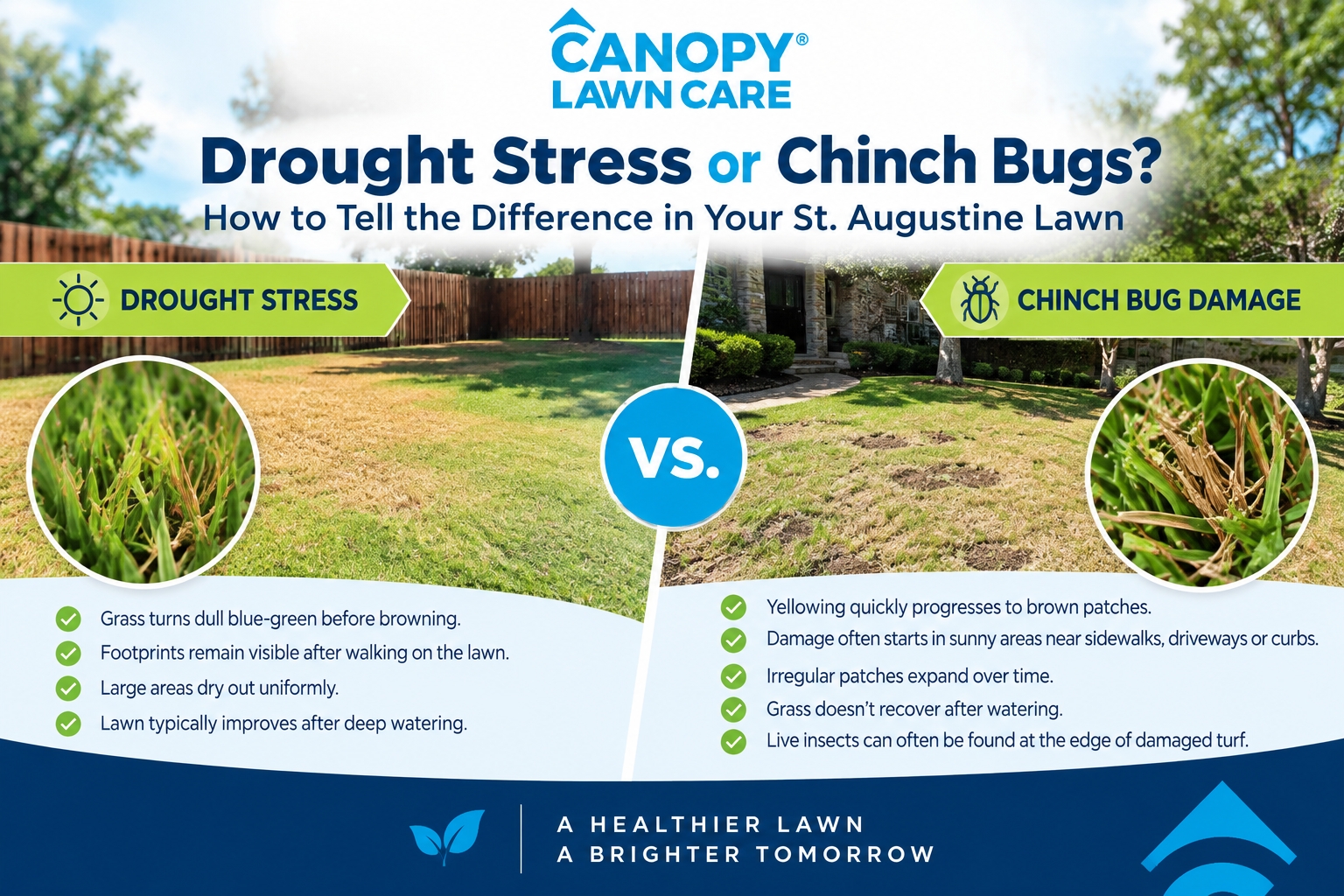
- Grass turns dull blue-green before browning.
- Footprints remain visible after walking across the lawn.
- Large areas begin to dry uniformly.
- The lawn responds positively after a deep watering.
Even healthy lawns can experience drought stress during prolonged periods of extreme heat. The goal is to provide deep, infrequent irrigation that encourages deeper rooting rather than frequent, shallow watering.
Chinch Bug Damage
Chinch bugs are one of the most destructive insects affecting St. Augustinegrass in Texas.
Unlike drought, chinch bugs feed by piercing the grass blades and injecting toxins while removing plant juices. The damaged turf often looks dry, even when plenty of soil moisture is available.
Common signs include:
• Yellowing that quickly progresses to brown patches.
• Damage typically begins in sunny areas near sidewalks, driveways, or curbs.
• Irregular patches expand outward over time.
• Grass does not recover after watering.
• Live insects can often be found at the edge between healthy and damaged turf.
Why They Look So Similar
Both drought stress and chinch bug injury cause turf to appear dry and brown. During hot summers, the two problems can even occur together, making diagnosis difficult.
One simple test is to water the affected area thoroughly.
Prevention Is Better Than Recovery
Chinch bugs are much easier to prevent than they are to recover from.
At Canopy Lawn Care, we recommend a preventive chinch bug application on St. Augustine lawns before populations reach damaging levels. Throughout the summer, we continue to monitor properties for signs of insect activity and respond if additional pressure develops.
Unfortunately, once chinch bugs have caused significant damage, controlling the insects is only the first step. The turf still has to recover, and depending on the severity of the injury, that process can take weeks, or in some cases, require repair.
The best defense is a healthy, dense lawn with a strong root system. While no lawn is immune to chinch bugs, healthy turf is better equipped to withstand environmental stress and recover more quickly.
If you notice brown patches that continue to expand or don’t respond to watering, don’t wait. Early diagnosis gives us the best opportunity to minimize damage and protect the rest of your lawn.
Related Grass Guide, Insect Control, Lawn Care

What Happens to Your Soil When Lawn Treatments Stop? A Real-World Case Study