Why Fall Is the Best Time to Aerate and Overseed Your Cool-Season Lawn
Healthy lawns aren’t built in the spring—they’re built in the fall.
If you have a cool-season lawn made up of Kentucky bluegrass, tall fescue, or perennial ryegrass, fall is the single most important season for improving its long-term health.
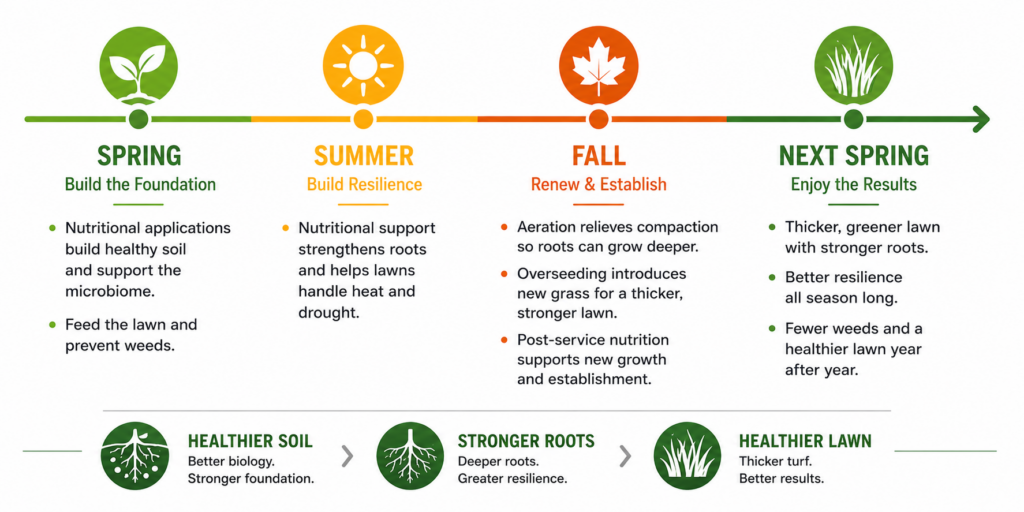
While many homeowners think of spring as lawn care season, turfgrass tells a different story. As summer heat fades and soil temperatures remain warm, cool-season grasses enter their most active period of root growth and recovery. That’s why fall aeration and overseeding consistently produce better results than nearly any other lawn improvement you can make throughout the year.
Why Fall Is Ideal for Cool-Season Lawns
Throughout the summer, your lawn endures months of stress.
Heat, foot traffic, drought, mowing, insects, and disease all take their toll. Even healthy lawns naturally thin over time as individual grass plants age or struggle through difficult growing conditions.
Fortunately, fall creates the perfect environment for recovery.
Warm soil encourages rapid seed germination and root development, while cooler air temperatures reduce stress on young grass plants. At the same time, weed competition begins to decline, giving new seedlings a better opportunity to establish before winter.
Rather than simply helping your lawn survive another season, fall helps prepare it to thrive next spring.
What Aeration Actually Does
Many homeowners think aeration is simply punching holes in the lawn.
In reality, it’s much more important than that.
Over time, soil naturally becomes compacted. Every footstep, lawn mower, pet, and rainfall event gradually compresses the soil, reducing the amount of oxygen available to grass roots.
Compacted soil makes it harder for roots to:
- Absorb water
- Access nutrients
- Exchange oxygen
- Develop deeper root systems
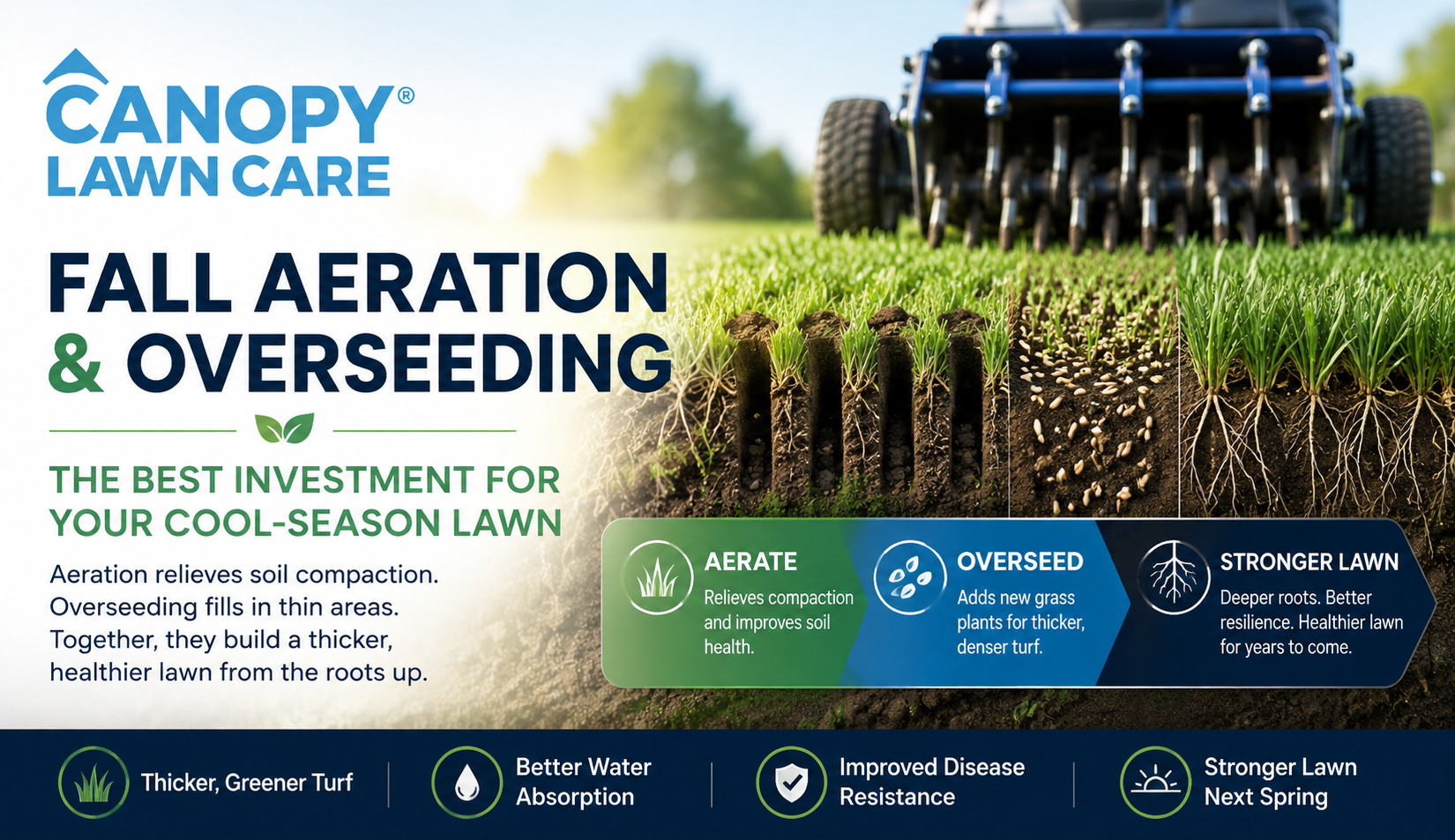
Core aeration removes small plugs of soil, creating pathways that improve airflow, water movement, and root development throughout the soil profile.
For Canopy Lawn Care, aeration isn’t just about relieving compaction—it’s about restoring healthier soil so the entire lawn performs better.
Why Overseeding Matters
Even healthy lawns naturally become thinner over time.
Overseeding introduces new grass plants into existing turf, increasing overall density while helping fill thin or damaged areas.
A thicker lawn provides several long-term advantages:
- Naturally crowds out weeds
- Improves drought tolerance
- Recovers faster from summer stress
- Creates a fuller, more uniform appearance
- Produces healthier root systems across the lawn
Think of overseeding as continuously renewing your lawn rather than waiting until major repairs become necessary.
Aeration and Overseeding Work Better Together
While both services provide benefits independently, they perform best as a combination.
Aeration creates thousands of openings where seed can settle into direct contact with the soil.
That seed-to-soil contact is one of the most important factors influencing successful germination.
Without aeration, much of the seed remains trapped in the existing turf canopy where it may dry out before establishing.
Together, aeration and overseeding create an ideal environment for new grass to emerge while improving the health of the existing lawn.
Building Healthier Lawns from the Soil Up
At Canopy Lawn Care, we view aeration and overseeding differently than many lawn care companies.
Rather than treating it as a once-a-year service, we see it as one of the most important opportunities to improve the health of your soil and strengthen your lawn for years to come.
Healthy soil supports stronger roots.
Stronger roots produce healthier grass.
Healthier grass naturally becomes more resilient to drought, disease, insects, and environmental stress.
It’s another example of our soil-first approach to building healthier lawns—not simply greener ones.
Frequently Asked Questions
When is the best time to aerate and overseed a cool-season lawn?
The ideal time is late summer through early fall, when soil temperatures are still warm but air temperatures have cooled. This combination promotes faster seed germination, stronger root development, and less competition from weeds.
Should I aerate before overseeding?
Yes. Core aeration creates openings in the soil that improve seed-to-soil contact, giving new grass seed a much better chance to germinate and establish healthy roots.
How often should I aerate and overseed my lawn?
Most cool-season lawns benefit from annual aeration and overseeding. Lawns with heavy foot traffic, compacted soil, or thinning turf may see even greater long-term benefits from yearly service.
What types of grass benefit from fall overseeding?
Fall overseeding is recommended for cool-season grasses such as tall fescue, Kentucky bluegrass, and perennial ryegrass. These grasses naturally experience their strongest root growth during the fall.
How long does it take to see results after aeration and overseeding?
Grass seed typically begins to germinate within 7–21 days, depending on the grass variety, soil temperatures, and watering practices. Your lawn will continue to establish throughout the fall, with the full benefits becoming even more noticeable the following spring.
Can I mow my lawn after aeration and overseeding?
Yes, but wait until the new grass reaches about 3–4 inches tall before mowing. Using sharp mower blades and avoiding heavy traffic on newly established seedlings will help ensure successful establishment.
Related Lawn Care, Seasonal Tips

What Happens to Your Soil When Lawn Treatments Stop? A Real-World Case Study