Why Plan Your Spring Lawn Care Now? Don’t Miss the Pre-Emergent Window

As temperatures drop and lawn growth slows, lawn care probably isn’t at the top of your to-do list.
For many homeowners, November marks the end of the lawn-care season. Professional treatments are wrapping up, and the next visit may not happen until February or March.
But while your lawn may be taking a seasonal break, now is an ideal time to plan for a healthier spring.
One of the most important reasons? Making sure your lawn receives its early-spring pre-emergent weed-control treatment before troublesome weeds have a chance to establish.
Key Takaways
- Early-spring pre-emergent treatments help prevent common summer annual weeds, including crabgrass.
- Timing is critical: most pre-emergent products must be applied before target weeds emerge.
- Soil temperatures and local weather conditions determine the appropriate treatment window.
- Planning during fall and winter helps ensure your lawn-care program is ready when spring treatments begin.
- Canopy’s HealthyLawn program combines timely weed prevention with soil-focused nutrition and ongoing care.
Why Is Early-Spring Weed Prevention So Important?
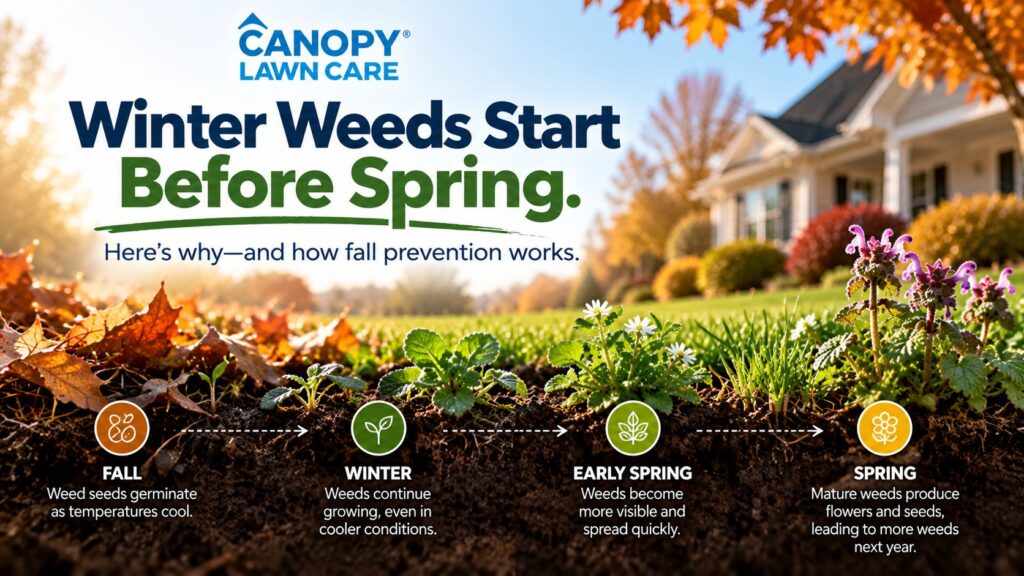
Some of the most frustrating summer lawn weeds begin developing before homeowners notice them.
Crabgrass, for example, starts germinating as soil temperatures warm in spring. By the time it becomes visible across your lawn, the ideal opportunity for preventive treatment may have passed.
Pre-emergent herbicides work by disrupting the establishment of susceptible weed seedlings.
Unlike treatments designed to control actively growing weeds, pre-emergent applications are most effective when applied before the targeted weeds begin emerging.
That’s why early-spring weed prevention is such an important part of Canopy’s approach.
Learn more in our guide to pre-emergent weed control.
When Should Spring Pre-Emergent Be Applied?
There isn’t one universal application date.
Soil temperatures, regional climate and seasonal weather patterns influence when weeds begin germinating.
Research from NC State Extension indicates that crabgrass commonly begins germinating when average soil temperatures reach approximately 55°F for several consecutive days.
In warmer markets, that window can arrive as early as February. Cooler regions may not reach the appropriate conditions until March or April.
And because spring temperatures vary from year to year, simply scheduling treatments for the same calendar date isn’t always the best approach.
The goal is to apply preventive weed control before germination—not after weeds become visible.
Why Should You Schedule Lawn Care Before Spring?
When the first warm days arrive, homeowners naturally begin thinking about their lawns again.
But spring weather doesn’t wait for homeowners to schedule service.
Getting your lawn-care plan established during fall or winter gives your local Canopy team time to understand your grass type, review your lawn’s needs and prepare for the appropriate treatment window.
Rather than reacting to weeds after they appear, you’re taking a proactive approach.
That doesn’t mean your lawn needs additional applications throughout winter.
For many Canopy locations, November marks the completion of the year’s final treatments, with regular service resuming in February or March.
Planning now is about being ready for the right treatments when your lawn needs them.
Does Spring Weed Prevention Work for Every Grass Type?
Both warm-season and cool-season lawns can benefit from appropriately timed spring weed prevention, but their treatment needs aren’t identical.
Cool-season grasses such as tall fescue may be actively growing as spring approaches.
Warm-season grasses such as Bermuda and zoysia may still be dormant when early preventive treatments are appropriate.
The right strategy depends on grass type, regional conditions, weed pressure and any plans for seeding or overseeding.
That’s why Canopy doesn’t treat every lawn according to the same calendar.
Our grass-type guide explains why understanding your lawn’s natural growing cycle matters.
Why Is Weed Prevention Only Part of the Plan?
Preventing weeds is important, but it isn’t the only factor in building a healthier lawn.
Soil conditions, appropriate nutrition, mowing, watering and seasonal stress all influence how well turf performs.
Canopy’s HealthyLawn program takes a soil-first approach, pairing preventive and targeted weed management with treatments designed to support long-term lawn health.
Our Soil Builder service is another way we help improve the growing environment beneath your grass.
The goal isn’t simply fewer weeds. It’s healthier, stronger turf that can better compete with weeds over time.
Spring Will Be Here Before You Know It
Your lawn may be slowing down for winter, but that doesn’t mean your lawn-care planning should stop.
Early-spring weed prevention is one of those opportunities where proper timing can make a meaningful difference.
By establishing your HealthyLawn plan now, you can be better prepared when the spring treatment window arrives.
Don’t wait until weeds become visible to start thinking about prevention.
Contact your local Canopy Lawn Care team today to get your lawn-care plan ready for Spring 2027.