Why Winter Weeds Start Before Spring—and How Fall Prevention Works
When homeowners think about weeds, they often picture spring and summer, when unwanted plants begin appearing across their lawns.
But here’s something many homeowners don’t realize: some of the weeds you see in spring actually started growing months earlier.
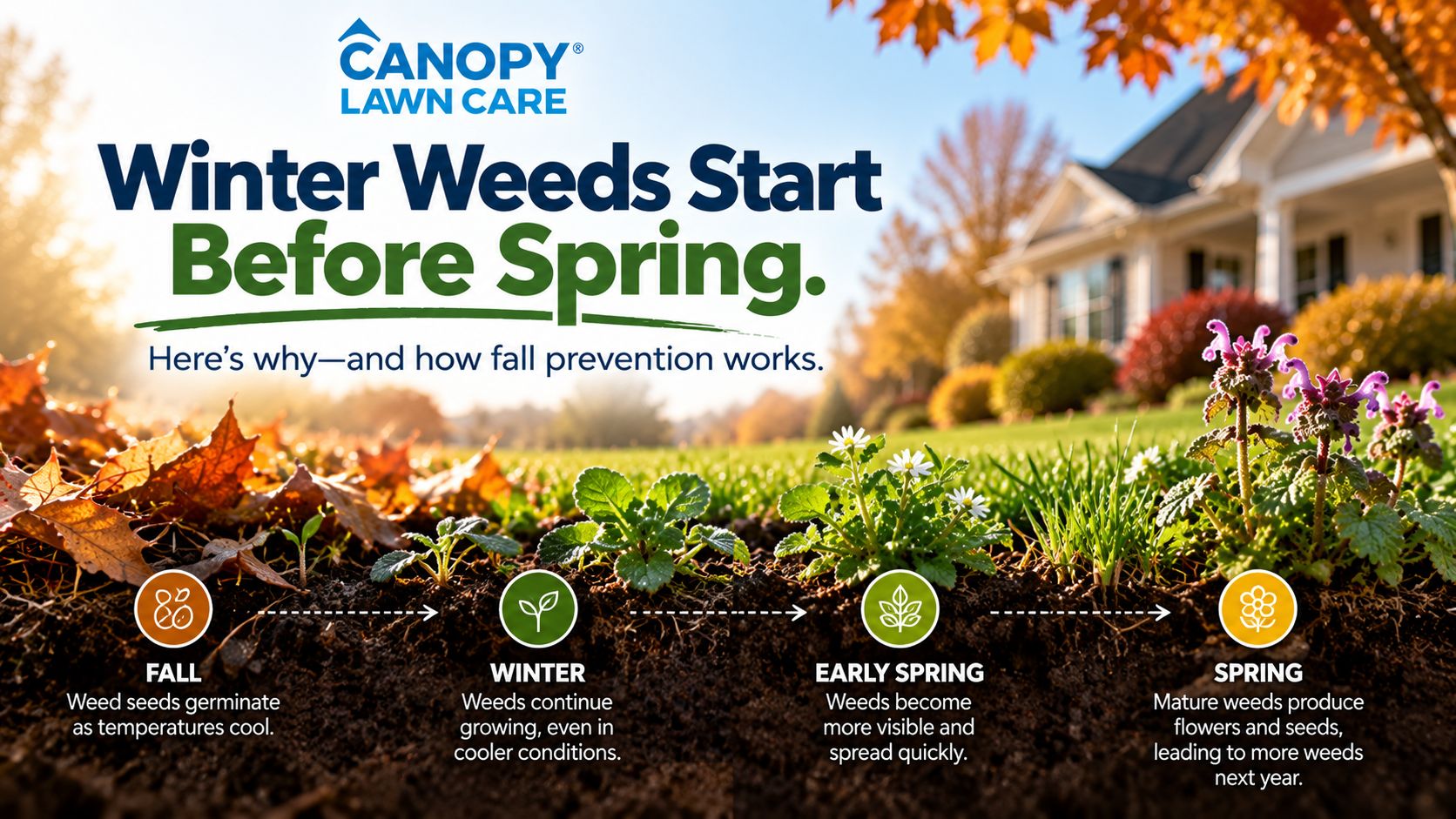
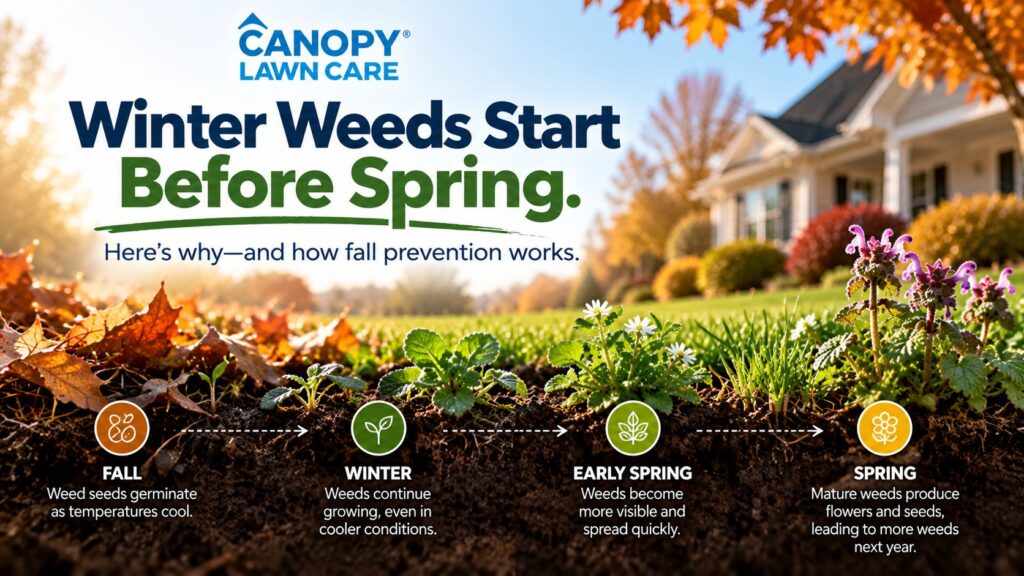
Winter annual weeds can begin germinating in fall, taking advantage of cooler temperatures and available soil moisture. By the time they’re noticeable in late winter or early spring, they’ve already had time to establish.
That’s why effective weed management isn’t simply about treating weeds after they appear. It’s about understanding when they grow, why they grow, and how to manage them before they become a bigger problem.
Key Takeaways
- Many common winter annual weeds begin germinating in fall, not spring.
- Henbit, chickweed and annual bluegrass are examples of weeds that can establish during cooler months.
- Properly timed fall pre-emergent treatments can help prevent certain weeds from establishing.
- Pre-emergent treatments generally work before weeds emerge—not after they’re actively growing.
- Healthy, dense turf helps limit opportunities for weeds, but soil health alone doesn’t eliminate weed pressure.
- Canopy combines targeted weed management with ongoing soil and lawn health care.
Why Do Winter Weeds Start Growing in Fall?
Many winter annual weeds follow a different growing cycle than the grass in your lawn.
As temperatures cool in fall, conditions can become favorable for seeds of certain weeds to germinate. These plants may continue developing through mild winter periods before growing more noticeably as spring approaches.
Common examples include:
- Henbit: A broadleaf weed often recognized by its purple flowers in late winter or spring.
- Common chickweed: A low-growing weed that can spread across thin or open areas of turf.
- Annual bluegrass (Poa annua): A grassy weed that can produce noticeable light-green patches and seedheads.
According to Clemson Cooperative Extension, many winter annual weeds germinate during fall and winter, making preventive timing an important consideration.
How Does Fall Pre-Emergent Weed Control Work?
Pre-emergent herbicides are designed to control susceptible weeds during germination and early establishment.
When applied at the appropriate time, these treatments create a protective zone in the soil that interferes with the establishment of certain germinating weeds.
Timing matters because pre-emergent treatments generally cannot control weeds that have already emerged.
Application timing varies by region, weather conditions, weed species and product. Soil temperature trends can help inform decisions, but there isn’t one universal application date for every lawn.
For additional guidance, read our article on pre-emergent weed control for warm-season grass.
Why Are Winter Weeds Especially Noticeable in Warm-Season Lawns?
Warm-season grasses such as Bermuda and zoysia slow their growth as temperatures decline and may enter winter dormancy.
During this period, the turf provides less active competition against weeds. Winter annual weeds can remain green and become especially noticeable against dormant, brown grass.
That doesn’t mean warm-season lawns are unhealthy. Dormancy is a normal seasonal response.
It does mean that fall weed prevention can be particularly valuable as part of a warm-season lawn-care strategy.
Learn more about these seasonal differences in our warm-season versus cool-season grass guide.
Why Does Canopy Take a Different Approach to Weed Control?
Traditional weed management can become a cycle of waiting for weeds to appear and then treating them.
Canopy takes a more comprehensive approach.
Our HealthyLawn program considers grass type, soil conditions, seasonal growth patterns and weed pressure to determine which treatments are appropriate and when they should be applied.
That includes targeted weed prevention, ongoing lawn nutrition and soil-focused care designed to support healthier, more resilient turf.
Healthy soil doesn’t make a lawn weed-proof. But improving the conditions that support desirable grass—combined with appropriate weed management—can help lawns become better equipped to compete with unwanted plants.
Explore how Canopy’s Soil Builder supports our soil-first approach.
A Healthier Spring Lawn Starts With Smarter Fall Decisions
By the time winter weeds become obvious in spring, the opportunity for certain preventive treatments may have already passed.
That’s why Canopy looks beyond what’s visible today and considers what your lawn will need in the months ahead.
Better lawn care isn’t about applying more treatments. It’s about applying the right treatments at the right time while building healthier soil and stronger turf.
Contact your local Canopy Lawn Care team to learn how our HealthyLawn program combines seasonal weed prevention with long-term lawn health.
Related Lawn Care, Seasonal Tips, Weed Control