What Happens to Your Lawn in Fall? Why Smarter Lawn Care Starts Below the Surface
When homeowners think about fall lawn care, they often focus on what they can see: grass growing more slowly, leaves falling or a warm-season lawn beginning to turn brown.
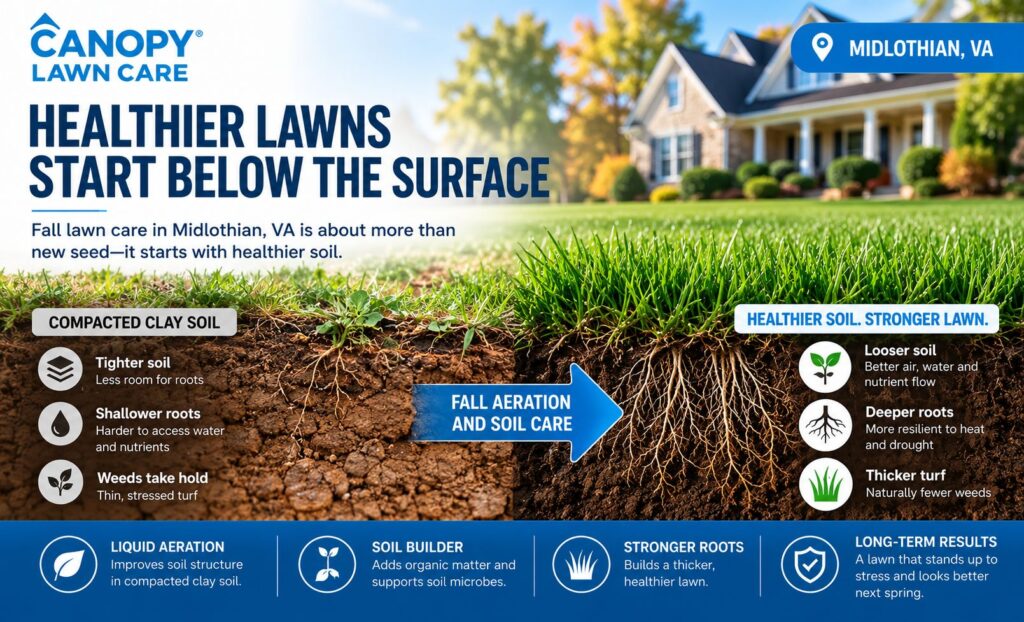
But some of the most important seasonal changes are happening below the surface.
Roots, soil conditions and the way grass stores and uses energy all influence how a lawn responds to fall, winter and eventually spring.
That’s why Canopy takes a different approach to lawn care. Instead of simply treating what’s visible, we start by understanding the grass, soil, climate and season.
Key Takeaways:
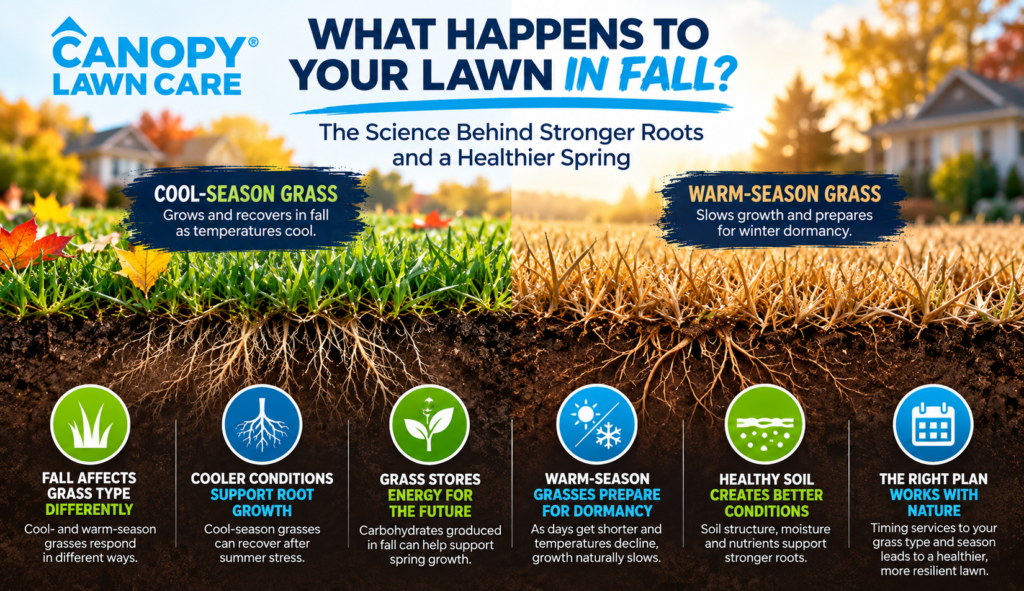
- Fall affects warm- and cool-season grasses very differently.
- Cool-season grasses can take advantage of more favorable fall growing conditions after summer stress.
- Warm-season grasses begin preparing for winter dormancy as temperatures and daylight decline.
- Grass can store carbohydrates that support future growth and recovery.
- Healthy soil helps create better conditions for roots, water and nutrients.
- The best lawn-care plan works with the lawn’s biology rather than treating every lawn the same way.
Your Lawn Doesn’t Stop Working When Summer Ends
Grass doesn’t simply switch off in fall.
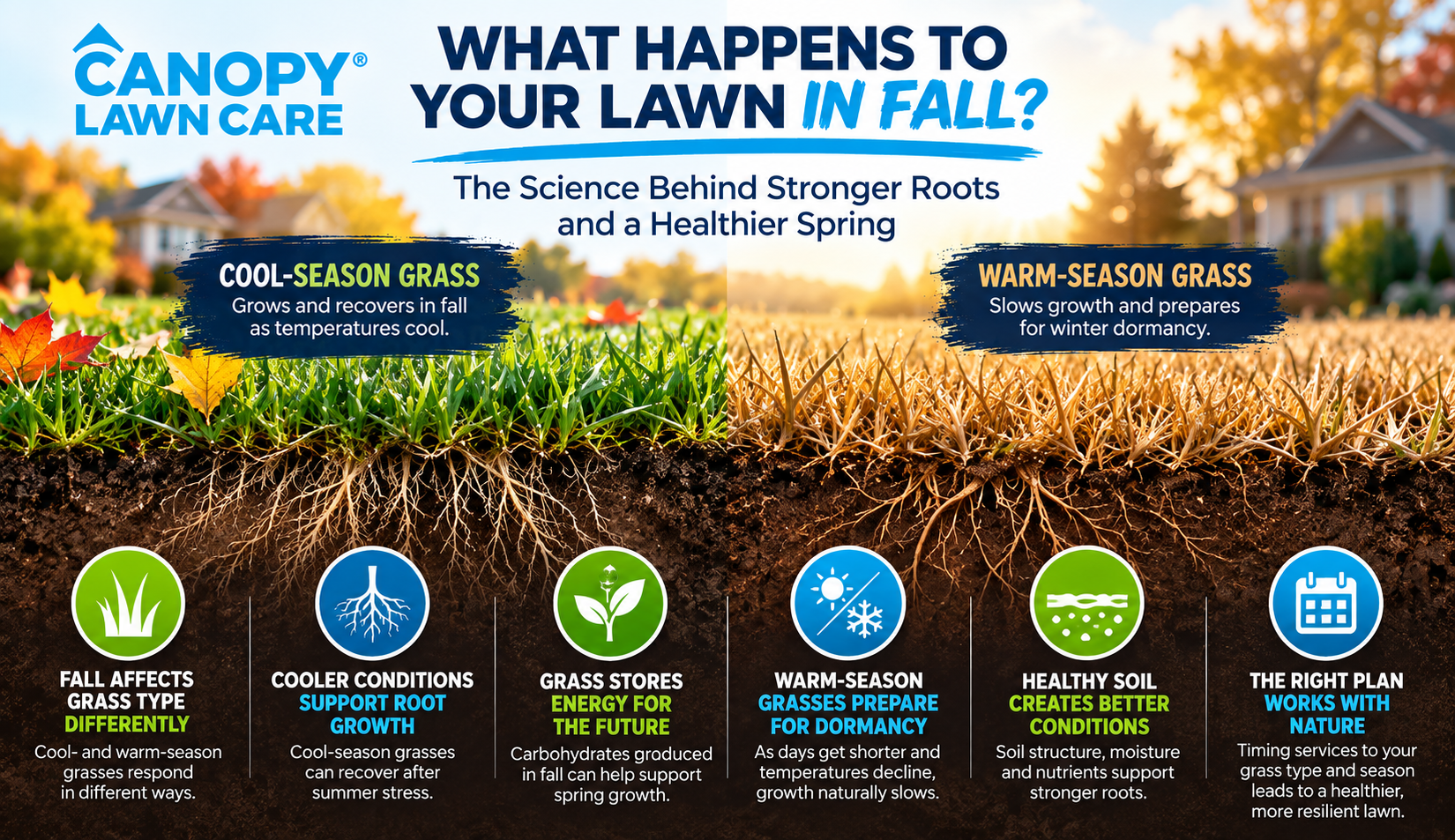
Cool-season grasses such as tall fescue enter a period when cooler temperatures can support growth and recovery after summer stress. Research has shown that high summer soil temperatures can negatively affect cool-season turf roots, helping explain why fall can be such an important recovery period. (Environmental and Experimental Botany)
Warm-season grasses such as Bermuda and zoysia do something very different. As temperatures and daylight decline, growth slows and the plant begins preparing for winter dormancy.
That distinction matters.
It’s why Canopy doesn’t believe in a one-size-fits-all fall lawn program. A tall fescue lawn entering an active fall growing period shouldn’t necessarily receive the same strategy as a Bermuda lawn preparing for dormancy.
If you’re unsure which category your lawn falls into, start with our guide to warm-season vs. cool-season grass.
What’s Happening Below the Surface?
Grass leaves capture sunlight and produce carbohydrates through photosynthesis. Some of that energy supports immediate growth, while some can be stored for future use.
Penn State turfgrass specialists explain that carbohydrate reserves in cool-season turf can accumulate during fall and contribute to recovery from stresses such as heat, drought, pests and mowing injury. (Penn State Extension)
Warm-season grasses are preparing too—but differently.
Research on Bermuda grass has documented changes in sugars and other compounds as the plant acclimates to colder conditions. (Crop Science)
So when Bermuda begins turning brown, the lawn isn’t necessarily dying. It’s transitioning.
Our guide to Bermuda grass fall care explains what homeowners should—and shouldn’t—do during that transition.
Why Canopy Starts With the Soil
Traditional lawn care can easily become a cycle of reacting to what appears above ground:
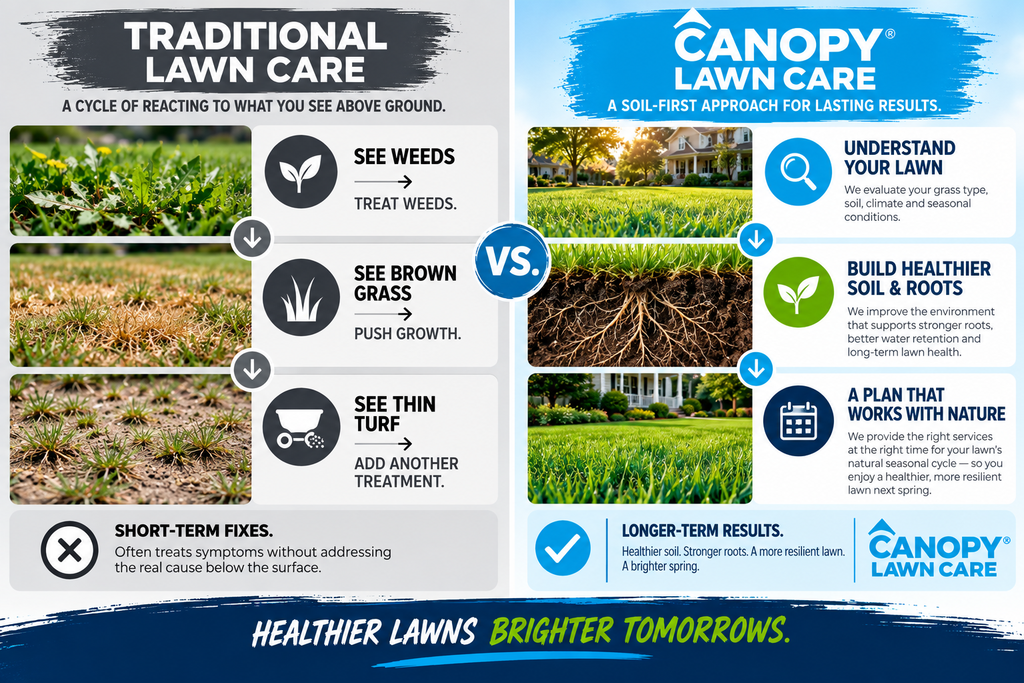
But the appearance of a lawn doesn’t always tell you why it’s struggling.
Roots depend on the soil around them for water, oxygen and nutrients. Compaction, moisture, soil structure and nutrient availability all affect that growing environment.
That’s why Canopy’s approach is soil first.
Rather than simply chasing short-term color, the objective is to improve the environment that supports healthier roots and a more resilient lawn over time.
Canopy’s Soil Builder is one example of how we address the lawn from the ground up.
Fall Shows Why Grass Type Matters
Consider two neighboring lawns.
One is tall fescue. The other is Bermuda.
The fescue may be actively growing and recovering from summer stress just as the Bermuda lawn begins slowing toward dormancy.
Same neighborhood. Same weather. Same time of year.
Different biology. Different needs.
That’s the problem with treating lawn care as a standardized calendar of applications.
Canopy’s approach starts by asking better questions:
What grass are we managing? What is happening in the soil? What stresses has the lawn experienced? What is the plant naturally trying to do this season?
Then we build the lawn-care strategy around those answers.
Work With Your Lawn, Not Against It
Spring may be when homeowners notice their lawns most, but a healthier spring lawn doesn’t begin with the first warm weekend of the year.
Fall can be an important period for cool-season recovery, warm-season winter preparation and improving the growing environment underneath both.
The science points toward a simple idea:
Better lawn care isn’t about doing more. It’s about doing the right things at the right time for the right lawn.
That’s what Canopy means by redefining lawn care from the ground up.
Related Grass Guide, Lawn Care, Seasonal Tips

What Happens to Your Soil When Lawn Treatments Stop? A Real-World Case Study