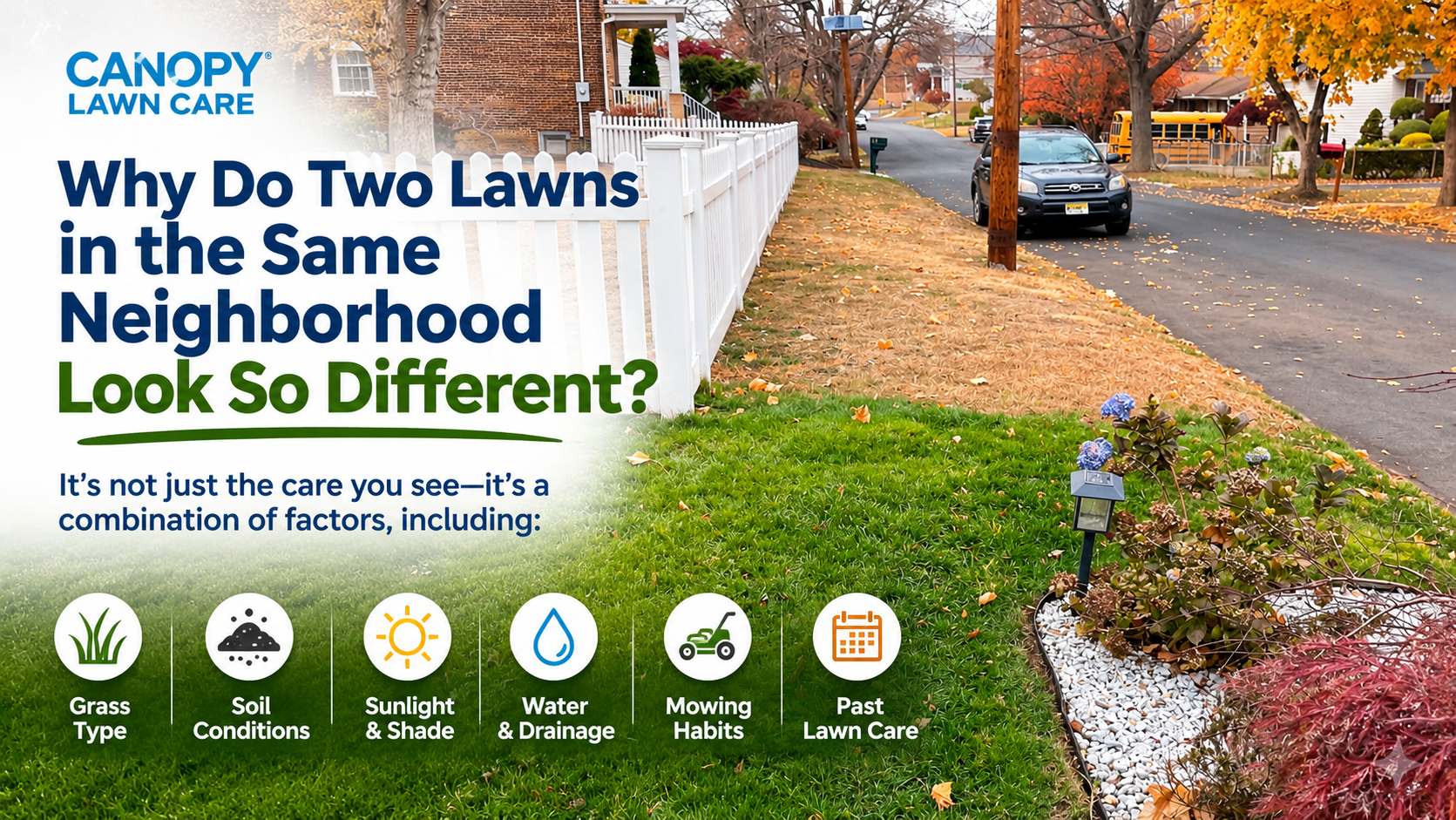
Why Do Two Lawns in the Same Neighborhood Look So Different?
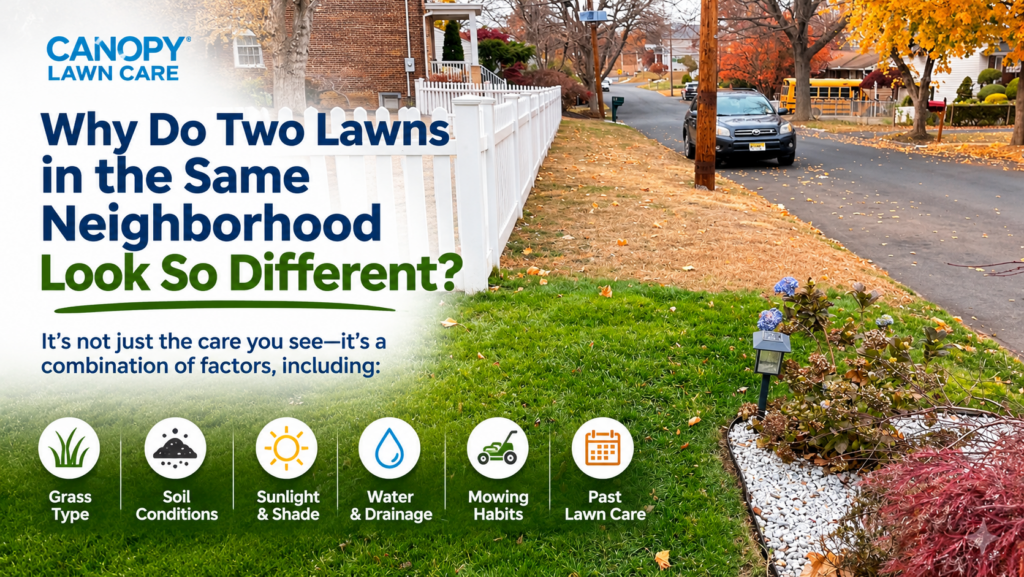
You’ve probably noticed it while walking through your neighborhood. Two homes sit side by side, experience the same weather, and receive roughly the same amount of rainfall—yet one has a thick, green lawn while the other struggles with thin patches, weeds or discoloration.
What’s the difference?
A healthy lawn depends on much more than sunshine and fertilizer. Grass type, soil conditions, drainage, mowing habits and even a home’s history can influence how a lawn looks and performs.
At Canopy Lawn Care, we believe understanding those differences is the first step toward building a healthier lawn.
Key Takeaways
- Neighboring lawns can have very different soil and growing conditions.
- Grass type determines how a lawn responds to heat, cold and seasonal changes.
- Soil structure, compaction and biological activity influence root health.
- Sunlight, watering and mowing practices affect lawn performance.
- A greener lawn isn’t always a healthier lawn.
- The best lawn-care strategy addresses the conditions beneath the grass—not just what you see above ground.
Is Your Neighbor Growing the Same Type of Grass?
Not all grass grows or responds to weather the same way.
Cool-season grasses, such as tall fescue and Kentucky bluegrass, typically perform best during cooler growing conditions. Warm-season grasses, including Bermuda and zoysia, thrive during warmer months and may turn brown as they enter winter dormancy.
That means two lawns can look dramatically different in November without either lawn necessarily being unhealthy.
Even within the same grass species, varieties can differ in color, texture, growth rate and stress tolerance.
Understanding your grass type is essential to knowing what your lawn needs throughout the year.
Read our guide to warm-season and cool-season grass to learn more.
What’s Happening Beneath the Surface?
Two neighboring properties can have surprisingly different soil conditions.
Construction activity, grading, foot traffic and previous landscaping practices can affect soil compaction, drainage and the environment surrounding grass roots.
Compacted soil limits the movement of air and water and can restrict root development. Research-based guidance from Penn State Extension explains how compaction can negatively affect turfgrass growth and performance.
Soil organic matter and biological activity also influence nutrient cycling and the soil’s ability to support healthy plant growth.
This is why Canopy starts with the soil.
Our approach considers the growing environment beneath your lawn rather than simply responding to visible symptoms.
Learn how Canopy’s Soil Builder helps address the foundation of lawn health.
Does Your Lawn Get the Same Sunlight and Water?
Even neighboring lawns rarely experience identical growing conditions.
One property might receive full afternoon sunlight, while another spends much of the day shaded by trees or buildings.
Shaded turf often grows differently and may become thinner when the grass variety isn’t well suited to limited sunlight.
Watering practices also matter. Irrigation coverage, sprinkler placement, soil drainage and watering frequency can create substantial differences between properties.
According to University of Minnesota Extension, watering needs depend on weather, soil conditions and the lawn’s growth characteristics.
A lawn that receives too little water may experience stress. Too much water can also contribute to poor growing conditions.
The goal is appropriate watering—not simply more watering.
Could Your Lawn-Care Habits Be Making a Difference?
Small maintenance differences can produce noticeable results over time.
Mowing too short can reduce the leaf area grass needs for photosynthesis and make turf more vulnerable to stress.
Dull mower blades can tear grass rather than cut it cleanly, while repeated traffic or equipment use can contribute to soil compaction.
Fertilization and weed-control timing also influence lawn performance.
A treatment that benefits one lawn may be unnecessary—or poorly timed—for another.
That’s why successful lawn care requires understanding the grass, the environment and the season.
Why Doesn’t Greener Always Mean Healthier?
A lawn’s color tells only part of the story.
Rapid green growth doesn’t necessarily indicate strong roots, balanced nutrition or healthy soil conditions.
Similarly, temporary browning may reflect normal seasonal dormancy rather than a serious lawn problem.
The University of Maryland Extension emphasizes that appropriate turfgrass selection and management practices are essential to sustainable lawn care.
At Canopy, we look beyond short-term appearance to support healthier soil, stronger turf and long-term resilience.
Your Lawn Deserves Its Own Plan
Your lawn may share a property line with your neighbor’s, but that doesn’t mean it shares the same needs.
Grass type, soil, sunlight, water and maintenance history all influence how your lawn performs.
Better lawn care starts with understanding why your lawn looks the way it does—not simply applying another treatment.
That’s the thinking behind Canopy’s soil-first HealthyLawn program.
Ready to discover what your lawn actually needs? Connect with your local Canopy Lawn Care team and start building a healthier lawn from the ground up.
Related Lawn Care, Seasonal Tips