Is Your Lawn Dormant or Dead? How to Tell the Difference This Winter
Your lawn was green a few months ago. Now it’s turning brown, growth has slowed, and you’re wondering: Is my grass dying, or is this normal?
The good news? Brown grass doesn’t always mean dead grass.
Many lawns naturally enter dormancy when temperatures change or growing conditions become stressful. But sometimes, brown patches indicate an underlying problem that needs attention.
Understanding the difference starts by knowing your grass type, recognizing seasonal changes, and looking beyond color alone.
Key Takeaways
- Brown grass isn’t necessarily dead. Dormancy acts as a natural survival response.
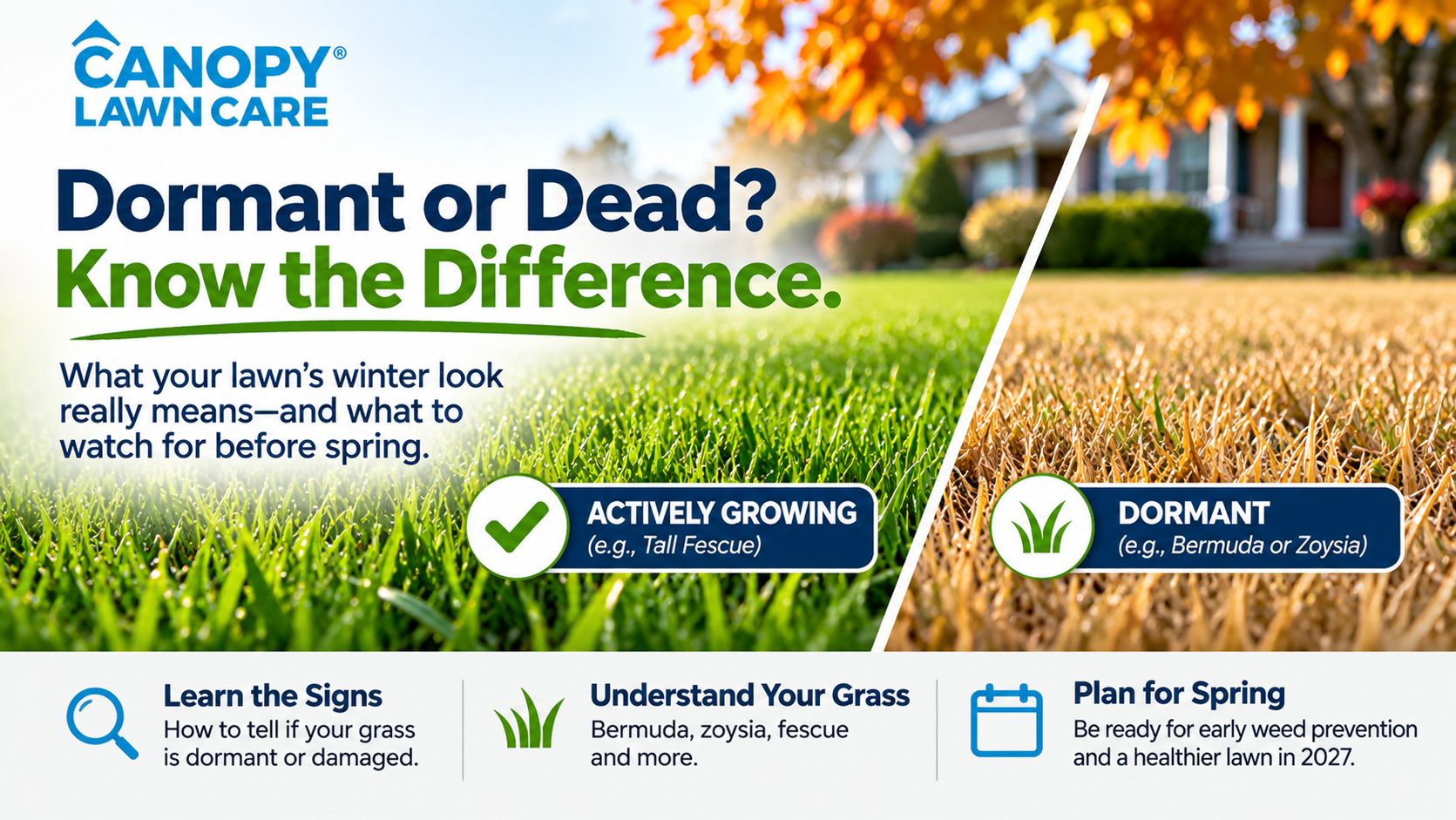
- Bermuda, zoysia, and other warm-season grasses commonly turn brown during winter.
- Cool-season grasses like tall fescue commonly remain green through cooler weather, although severe conditions can affect their appearance.
- Uneven browning, thinning, or damaged turf may indicate a problem beyond dormancy.
- A simple inspection can provide clues, but spring regrowth is often the best confirmation.
- Understanding your lawn’s condition now can help you plan appropriate care for spring.
Why Does Grass Turn Brown in Winter?
Grass responds to changes in temperature, sunlight, and growing conditions.
Warm-season grasses such as Bermuda, zoysia, St. Augustine, and centipede thrive during warmer weather. As temperatures decline, growth slows and these grasses may enter winter dormancy.
During dormancy, grass can lose its green color while living tissues remain capable of growing again when favorable conditions return.
Cool-season grasses, including tall fescue and Kentucky bluegrass, behave differently. They generally perform better in cooler temperatures and may remain green through much of winter, depending on the region.
According to University of Maryland Extension, dormancy serves as a natural response to seasonal changes and environmental stress.
Learn more about these differences in Canopy’s warm-season versus cool-season grass guide.
How Can You Tell If Grass Is Dormant or Dead?
Color alone isn’t enough to determine whether grass is alive.
Here are four things homeowners can evaluate:
1. Look at the pattern. If an entire Bermuda or zoysia lawn gradually turns tan as temperatures fall, seasonal dormancy appears a likely explanation. Isolated patches or irregular damage may deserve closer inspection.
2. Check the crowns and growing points. Grass grows from living tissues near the soil surface. Firm, healthy-looking crowns are more encouraging than soft, decaying tissue, although appearance alone cannot confirm survival.
3. Consider recent conditions. Drought, excessive moisture, disease, insects, and heavy traffic can produce symptoms that resemble dormancy.
4. Watch for spring recovery. Dormant warm-season grass should resume growth when temperatures become consistently favorable. Areas that remain brown well after surrounding turf greens up may need evaluation.
Important: No single visual test can reliably distinguish dormancy from dead grass in every situation.
Does Dormancy Look Different in Bermuda, Zoysia, and Fescue?
Yes. Grass type makes a significant difference.
| Grass Type | Typical Winer Appearance |
| Bermuda | Often turns uniformly tan or brown |
| Zoysia | Commonly becomes golden-brown during dormancy |
| Tall Fescue | Often remain green, although growth slows |
| Kentucky Bluegrass | May remain green or lose color during severe winter conditions |
These are general patterns, not guarantees. Local climate, grass variety, and environmental conditions all influence winter appearance.
For more information about Bermuda’s seasonal transition, read our Bermuda grass fall-care guide.
What Should You Do If Your Lawn Is Dormant?
If your grass is naturally dormant, trying to force it green isn’t the answer.
Avoid unnecessary fertilization intended to stimulate growth, reduce mowing as growth stops, and adjust watering based on weather and soil moisture.
University Extension guidance emphasizes that dormant turf should not be managed like actively growing grass. University of Maryland Extension recommends avoiding fertilization and mowing during dormancy.
If you notice unusual patches, standing water, or areas that deteriorated before temperatures dropped, a professional evaluation may help identify the cause.
Why Does Winter Lawn Health Matter for Spring?
Dormancy doesn’t mean your lawn-care strategy should be forgotten until the grass turns green.
Winter is an opportunity to assess problem areas, understand soil conditions, and prepare for the next growing season.
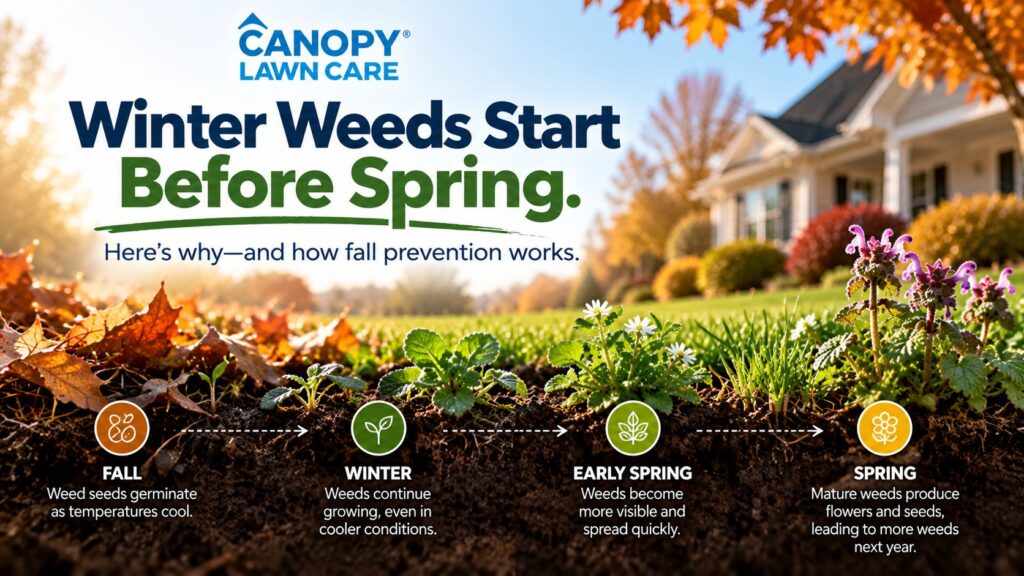
It’s also an important time to plan early-spring weed prevention.
Certain summer annual weeds, including crabgrass, begin germinating as soil temperatures warm—sometimes before warm-season turf has fully greened up.
Pre-emergent weed control must be timed before targeted weeds establish, which is why waiting until your lawn looks green again can mean missing an important preventive opportunity.
Learn more in our pre-emergent weed-control guide.
Brown Today Doesn’t Mean Unhealthy Tomorrow
A brown winter lawn isn’t automatically a lawn in trouble.
The key is understanding whether your grass is responding normally to the season or showing signs of stress that deserve attention.
At Canopy Lawn Care, our soil-first approach considers grass type, soil conditions, climate, and seasonal timing—not just what the lawn looks like today.
Your lawn may be resting for winter, but now is a smart time to plan for spring.
Connect with your local Canopy Lawn Care team to prepare your HealthyLawn program before the first spring treatment window.